みよし展

7/2[火]―15[月・祝]

niigata eya exhibition 673

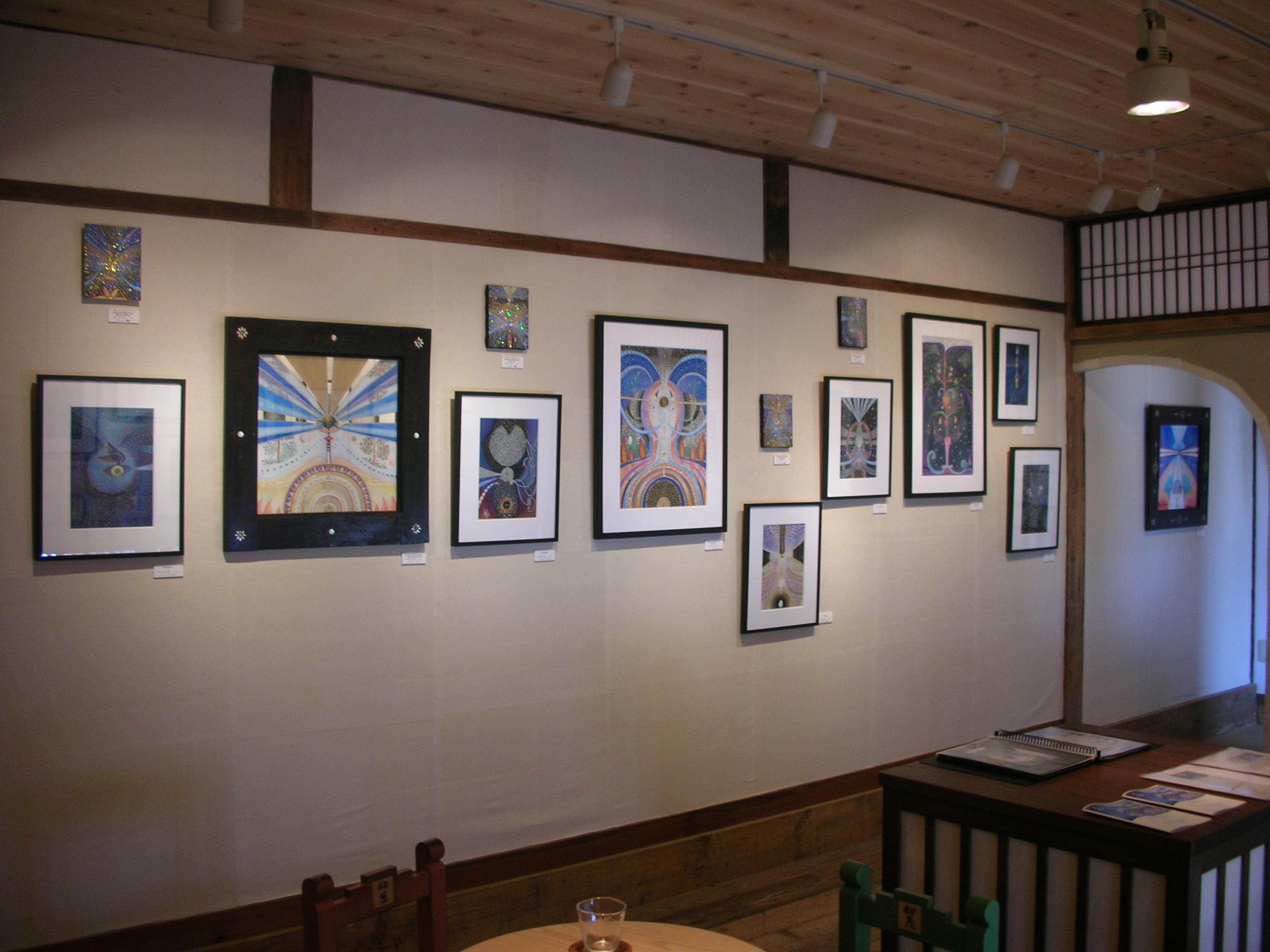
 みよしは、洲之内徹の現代画廊で発表していた素晴らしい画家で、洲之内の死後、私は彼女と知り合い、1991年にウィーンの彼女の住まいに10日間泊めていただき、たくさんの話を聞いた。それらの言葉の数々は、その後の私の人生の血肉となって、生きている。
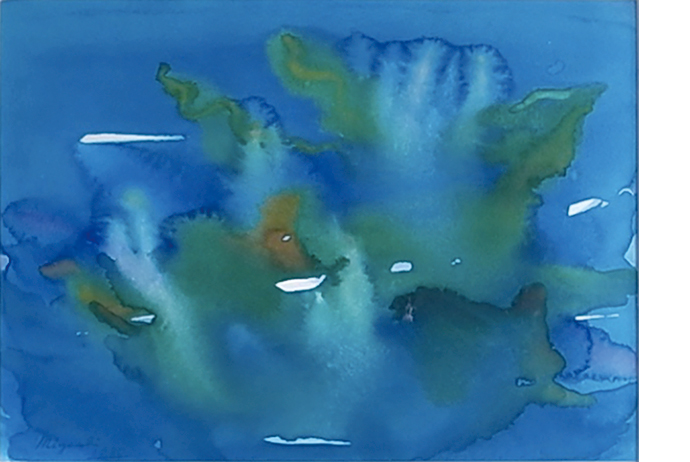
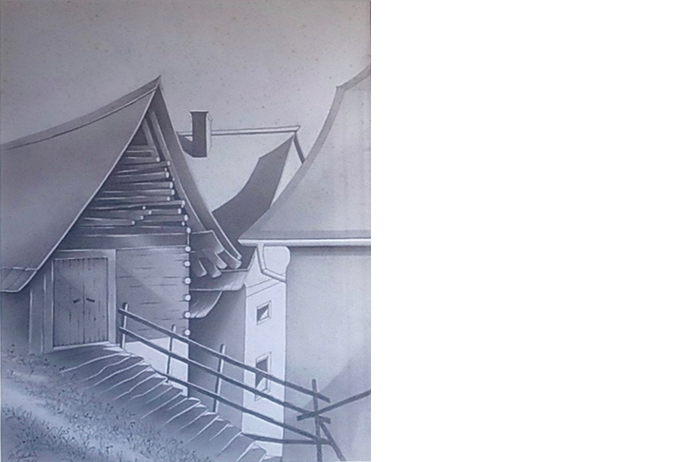
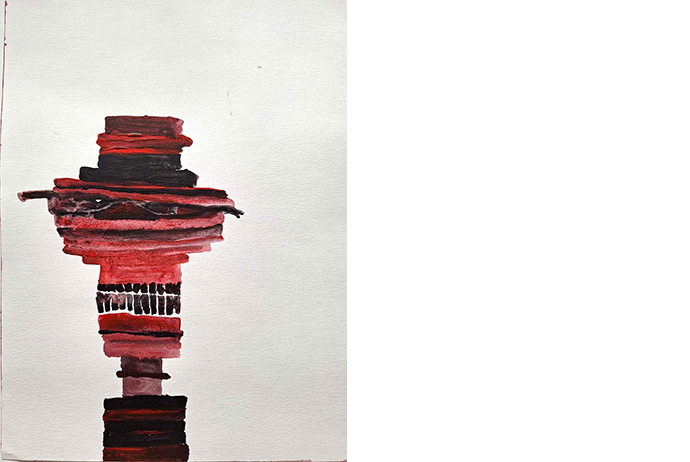
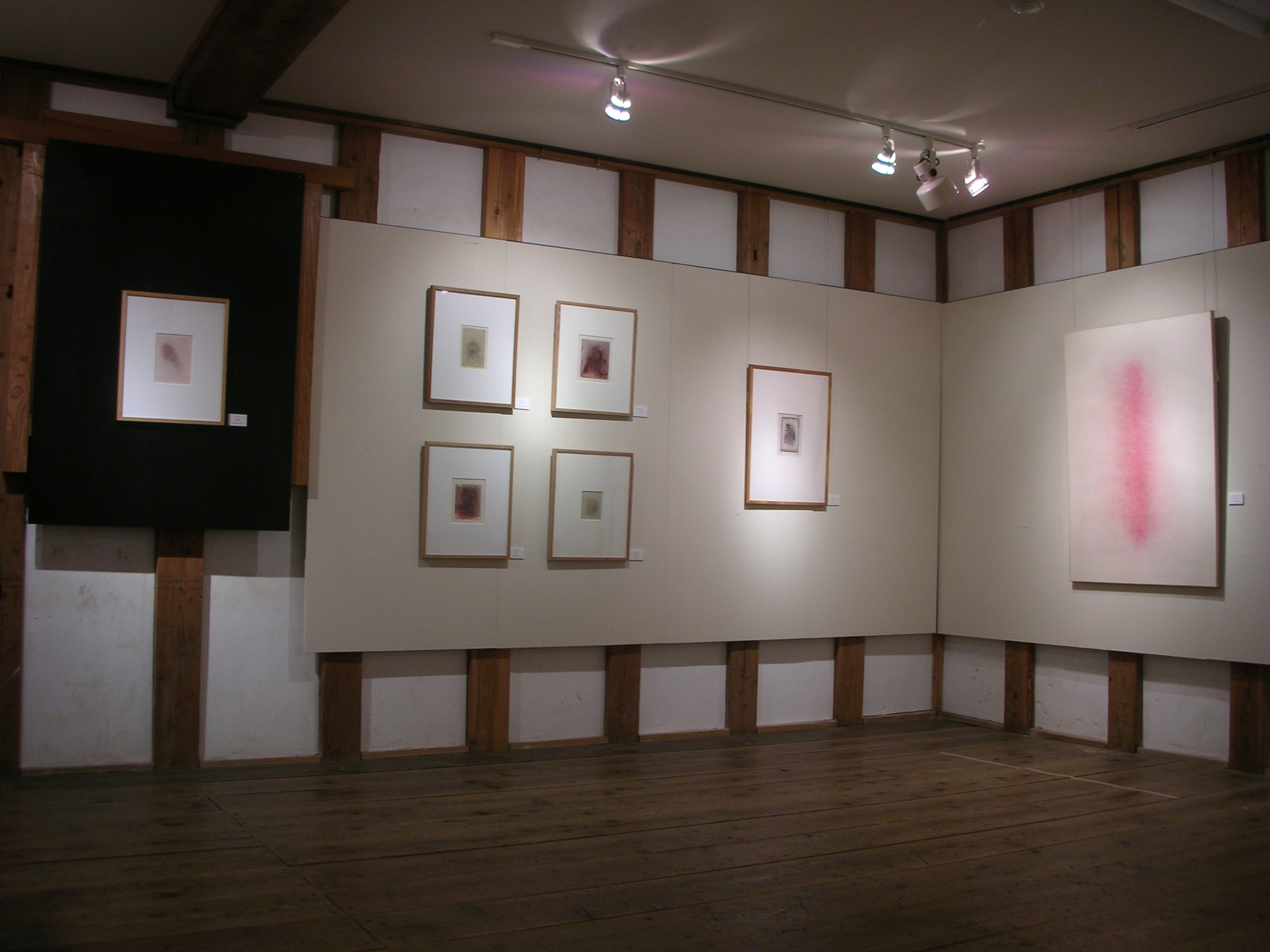
 鉛筆画と水彩画を彼女は残して逝ったが、彼女の生前、現代画廊ほかの場を通じ、彼女のもとを一旦離れた絵の一部を、今回新潟で展示できることになった。みよしの絵の魅力は、美しさと厳しさにある。それは洲之内徹のエッセイがそうであるように、困難な時代の、生きにくい人生を、根本で妥協せずに歩き抜いたこととつながっている。苦しくてならないとき、真に美しいものが、生きる糧になることを彼女と彼女の絵から私は教えられたのだった。(企画者:大倉宏)

MIYOSHI was a wonderful painter who had exhibited at Toru Sunouchi’s Gendai Gallery. After Sunouchi’s death, I became acquainted with her and stayed at her residence in Vienna for 10 days in 1991, where I heard her many stories. Many ofthose words have lived on in the flesh and blood of my life since then.
She passed away leaving behind pencil and watercolor paintings, and I am pleased to be able to exhibit some of the paintings she left behind in Niigata through the Gendai
Gallery and other venues during her lifetime. The charm of Miyoshi’s paintings lies in their beauty and severity. As Toru Sunouchi’s essay reveals, this is connected to the fact that Miyoshi walked through difficult times and a difficult life without compromising her fundamentals. She and her paintings taught me that in times of pain, what is truly beautiful becomes the sustenance of life. (Exhibition Planner: Hiroshi Okura)

みよし
1931年東京生まれ。1969年頃よりオーストリアのウィーンで暮らし、MIYOSHI名で初めはコラージュを制作。73年ウィーンのギャラリー・タオで初個展。74年アドリア海東岸を旅行しオリーブの木を素描したのをきっかけに鉛筆画を描きはじめる。ウィーンで『芸術新潮』を愛読していたことから洲之内徹に鉛筆画を見せるために78年に一時帰国。洲之内に高く評価され勇気を得て79年ウィーンのヴォルフルム画廊で鉛筆画の個展を開催し大きい反響を得た。その後水彩画の制作を始めエーゲ海を旅し海のシリーズを多数描いた。洲之内の現代画廊では86、87年に個展を開催。87年の洲之内没後、日本ではフォルム画廊などで発表。2001年ウィーンで没。

MIYOSHI
Born in Tokyo in 1931, Miyoshi lived in Vienna, Austria from around 1969, and initially produced collages under the name MIYOSHI. In 1973, she held first solo exhibition at Gallery Tao in Vienna. In 1974, began pencil drawings after traveling along the east coast of the Adriatic Sea and making drawings of olive trees. In 1978 she temporarily returned to Japan to show her pencil drawings to Toru Sunouchi, since she had read Geijutsu Shincho in Vienna and was a great admirer of his work. Her pencil drawings were highly praised by Sunouchi, who encouraged her to hold a solo exhibition of her pencil drawings at the Wolfrum Gallery in Vienna in 1979. It was a great success. After that, she began working in watercolor and traveled to the Aegean Sea, where she painted many series of sea paintings. She had solo exhibitions at Sunouchi’s Gendai Gallery in 1986 and 1987, and after Sunouchi’s death in 1987, she exhibited in Japan at Form Gallery (Tokyo) etc. She died in Vienna in 2001.

PHOTO(上):「ギリシャの海」 1982年 水彩、紙

みよし
PHOTO:「海」1986年水彩、紙

みよし展
PHOTO: 作品「光と影2」1986年 鉛筆/紙


関連イベント

ギャラリートーク 「みよしさんのこと」

7/5[金] 18:30
大倉宏(本展企画者)/参加費:500円/申込不要

本間裕介写真展

鎧潟をさがす旅/Journey To Find Yoroigata

6/16[日]―30[日]

niigata eya exhibition 672

 本間裕介の写真は、ネイチャーアクアリウムと写真の師である天野尚の写真と違っている。と、一目で感じられる。
 印象的なのが視点の低さで、身をかがめ、小動物の目で撮ったような写真が多い。しかしそれを「方法」としているのではなく、自然にそうなってしまうというふうで、そこがいい。
 見ていると、美しさに溶けて、どこかやわらかくも、切実な感情が聞こえてくる。現存する潟である佐潟を見つめながら、干拓で消えた鎧潟を探していると本間は言うのだが、その思いは、幼い日にその鎧潟で無数の命とたわむれた記憶から、美しい、生きた水槽を創造した天野の記憶を源流とする。それが本間という川に合流し、その水音が、無数の命を一挙に殺戮した干拓事業という過去に、私の目を誘っていく。(企画者:大倉 宏)

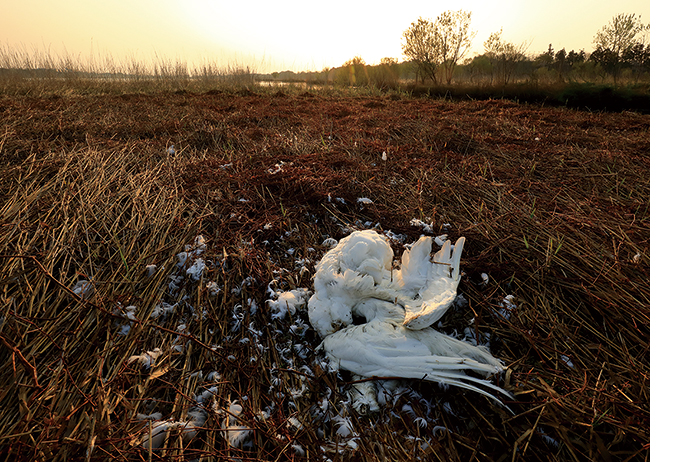
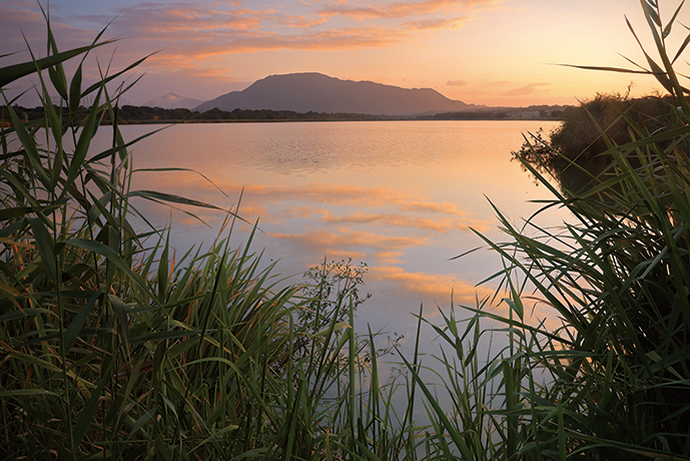
Yusuke Homma’s photographs are different from those of his mentor in Nature Aquarium construction and photography, Takashi Amano. One can sense this at a glance.
What is striking is the low point of view. However, this is not a “method,” but rather a natural way of taking pictures, and I like that.
When you look at them, you can hear the soft, yet sincere emotions melting into the beauty. Homma says that he is looking for the Yoroi Lagoon, which disappeared due to land reclamation, while gazing at the existing lagoon, Sagata; his thoughts’ headswaters originate from Amano’s memory of creating a beautiful, living aquarium based on his childhood memories of playing with countless aquatic lives in the Yoroi Lagoon. It joins a river called Homma, and the sound of its waters lures my eyes into the past of a land reclamation project that killed countless lives in one fell swoop. (Exhibition Planner: Hiroshi Okura)

本間裕介(ほんま ゆうすけ)
1975年新発田市生まれ。幼少から川や田で遊び、中学時代からアクアリウムの魅力にはまる。18歳で天野尚と出会い、ネイチャーアクアリウムや自然に対する考え方に共感する。写真家でもあった天野の撮影やネイチャーアクアリウムの制作助手を天野が亡くなるまで約20年間務めた。現在、株式会社アクアデザインアマノの水景クリエイターとして啓蒙活動を行っている。写真の個展は今回が初。
instagram@yusuke_homma_ada

Yusuke Homma
Born in 1975 in Shibata City, Japan. He played in rivers and rice paddies from childhood, and became fascinated with aquariums in junior high school. At the age of 18, he met Takashi Amano, with whom he shared his views on Nature Aquariums and nature. He worked as an assistant in photography and in Nature Aquarium production with Amano, who was also a photographer, for about 20 years until Amano’s death. Currently, he is engaged in enlightening activities as an aquascape creator for Aqua Design Amano Co., Ltd. This is the first solo exhibition of his photographs.
instagram@yusuke_homma_ada


ギャラリートーク「鎧潟をさがして」
6/28[金]18:30 ― 19:30

本間裕介 聞き手 大倉宏
参加料500円/定員15人/要申込
新潟絵屋へメール等でお申し込みください。
→満席となりました
info@niigata-eya.jp
tel.025-222-6888
Instagramにてご覧いただけます。

本間裕介写真展

本間裕介 写真展


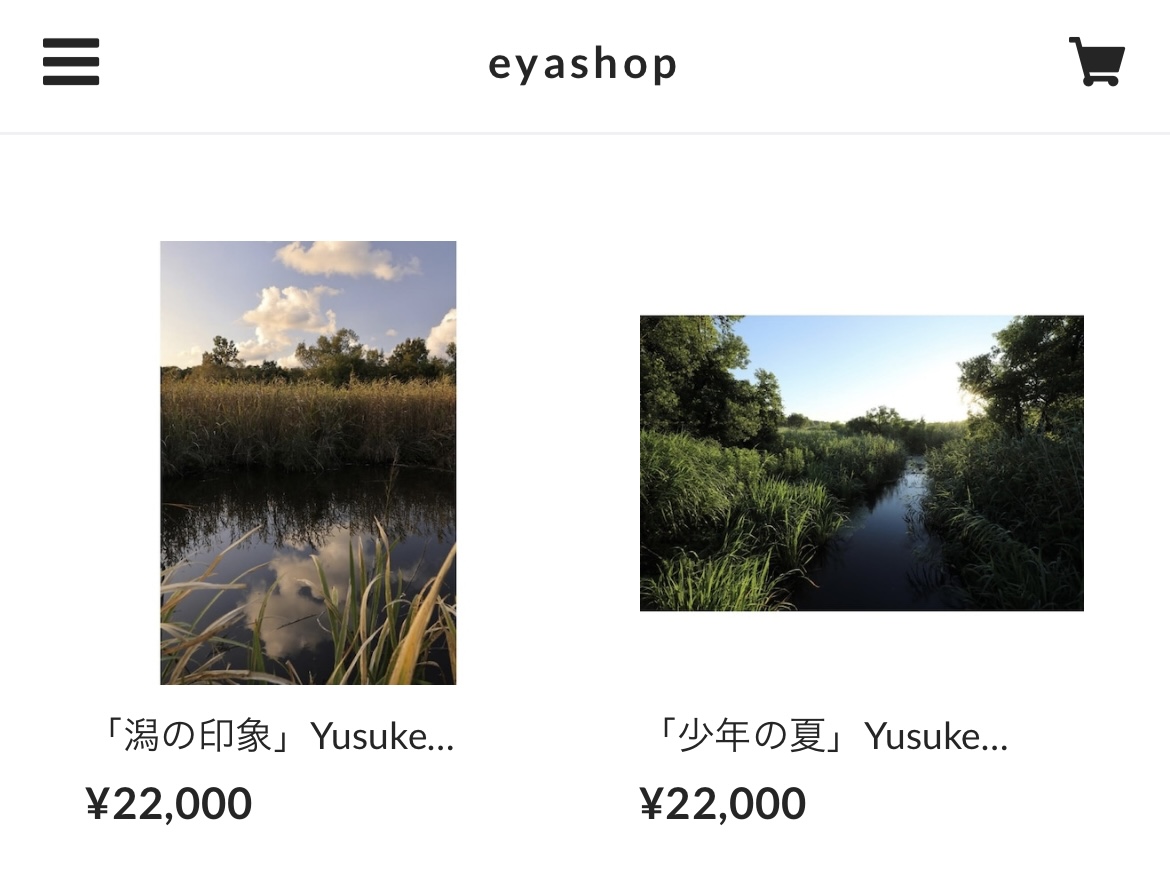
作品は店頭および通販サイトeyashopにてお求めいただけます
本間裕介


「天野尚写真展―創造の原点―」
6/8[土]― 7/21[日] 9:30 ― 17:00

休館日:月曜日(7/15は開館)、7/16
入館料600円(中学生以下無料)
会場:雪梁舎美術館 新潟市西区山田451
tel.025-377-1888

同時期に新潟市で天野尚さんの展覧会も開催されています。


BSNテレビ
NEWS「写真家・水景クリエイターとして活躍した亡き師匠 天野尚の原点 消えた『鎧潟』を探して…」

*動画をご覧いただけます(2024.6.20放送)

Johan Svensson展

6/1[土]―14[金]

niigata eya exhibition 671

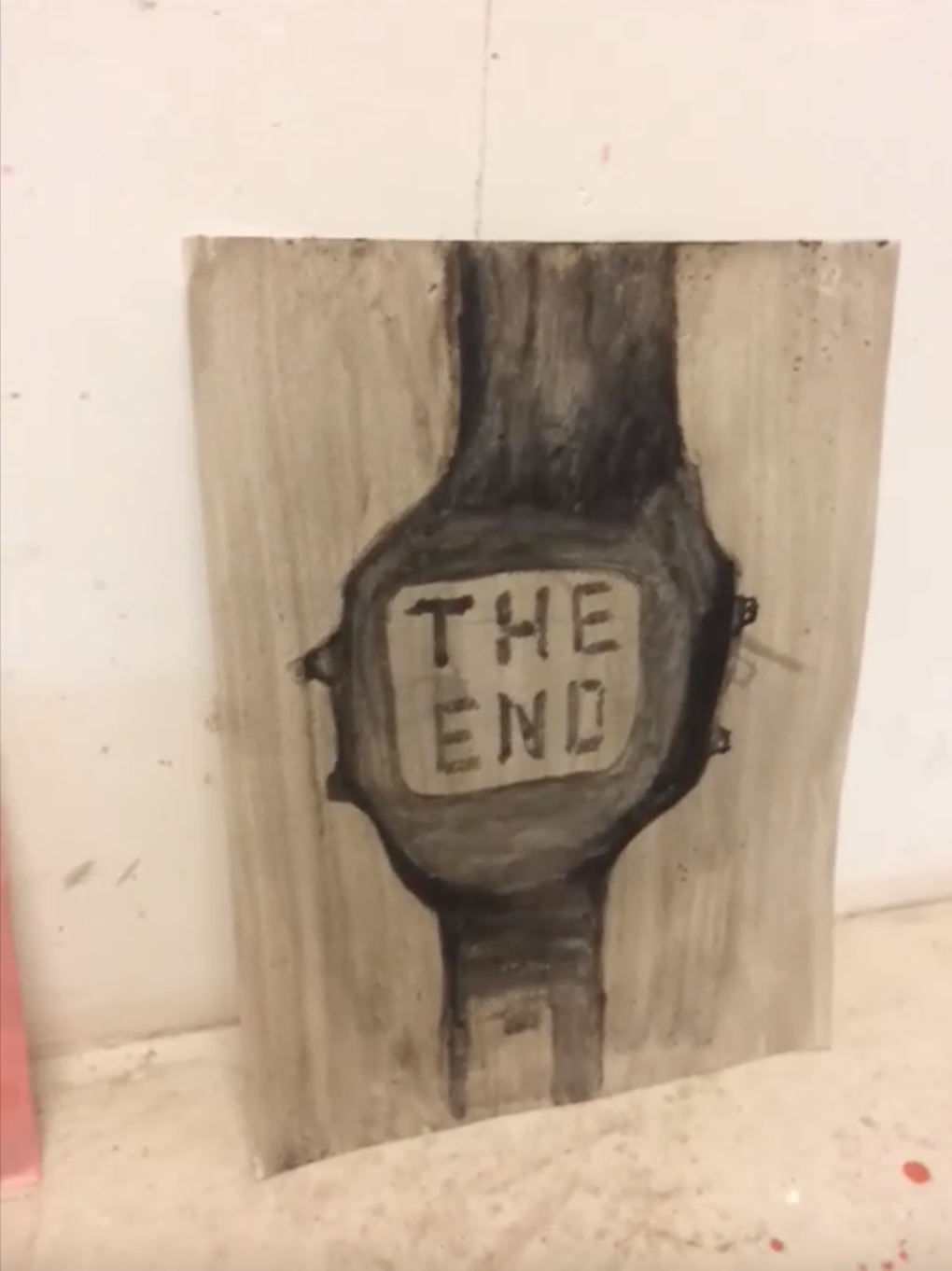
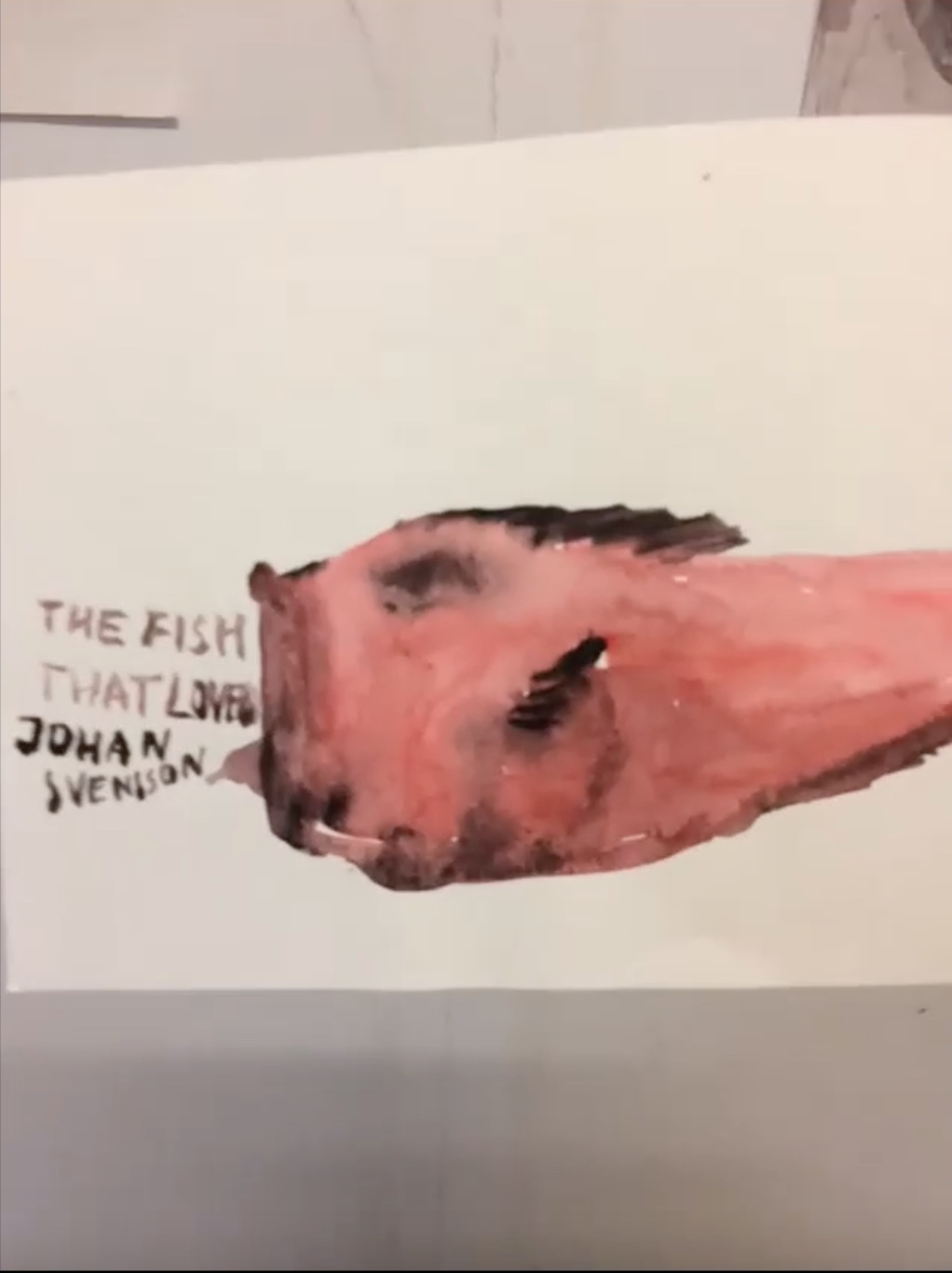
 一度見て惹かれたものが、ずいぶん時間が経ったあとで唐突に想起され、猛烈に見たいと欲することがある。Johanさんのペインティングがそれだ。落書きするように手を動かすなかで現れた人物や動物たち。描いて描いて描くことで、思わぬ着想を得て、それが立体や動画制作に生かされることもある。ストックホルムのスタジオ訪問から二年。ポップでシュールで癖になる、Johan Svensson日本初個展です。(企画者:岡部安曇)

Sometimes, after a long time has passed, something you saw once that attracted you
suddenly comes back to you, and you have an intense desire to see it again. Johan Svensson’s paintings are it. Two years have passed since my visit to his studio in Stockholm. Still, faces and animals that emerged from the doodle-like movements of his hands have revisited my mind.
By drawing and drawing and drawing, he gains unexpected perspectives and occasionally it can be applied to create three-dimensional or video works.
Pop, surreal and addictive, this is Johan Svensson’s first solo exhibition in Japan. (Exhibition Planner: Azumi Okabe)

PHOTO(上):「The Fish That Loved Johan Svensson」2018 アクリル/紙 14.8×20.8cm

Johan Svensson展
「Snake Surprise」2023 アクリル/紙 40.8×30.8cm

JohanSvensson
PHOTO:「The Smile」21×29cm acrylic on paper.

Johan Svensson (ヨハン・スヴェンソン)
1971年生まれ。マルメ芸術アカデミー及びウメオ大学ファインアート学院で学ぶ。カールスタッド(スウェーデン)在住。インスタレーション、アニメーション、彫刻、絵、文章を制作。インスタレーション、アニメーション、文章などのさまざま芸術表現を立体制作の手法を使って制作することが多い。日々の現実、時々の政治的な出来事、大衆文化の現象に言及した作品は、ホラー映画と子供向け番組の両方の特徴を持つ。見慣れたものをグロテスクに書き換えることが、芸術表現の原動力となっており、それは作品のスケールや、ある表現手段から別の表現媒体への動きに表れているかもしれない。スウェーデンでは、ヨーテボリ・アート・ギャラリー、ヴァナス、フェルグファブリケン、ボニエ・アート・ギャラリーなどで展覧会を開催。海外では、ヘルシンキ、イスタンブール、ロンドンなどで展覧会に参加。フィンランドのNIFCA、スウェーデンのIASPISよりスタジオ助成を受け、フィンランド、ストックホルム、カイロで制作滞在。これまでに7つのパブリックアート作品を手がけている。
www.johansvensson.org

Johan Svensson
Born in 1971, educated at Malmö and Umeå Art Academy but lives and works in Karlstad, Sweden. He works with installation, animation, sculpture, drawing and text. Different artistic expressions such as installation, animation or text are often combined with sculptural techniques.
The works touch on the reality of our time, everyday phenomena, political events of the day, phenomena from popular culture, and can have features of both horror films and children’s programs. The rewriting of the familiar into the grotesque is a driving method in his art. It can be about the scale of the objects or about a movement from one medium to another.
In Sweden, he has exhibited at Gothenburg Art Gallery, Wanås, Färgfabriken and Bonnier Art Gallery, among others. He has participated in several exhibitions abroad, including in Helsinki, Istanbul and London, and was a studio grantee at NIFCA in Finland and at IASPIS in Stockholm and the IASPIS studio abroad in Cairo. He has made seven public art works.
www.johansvensson.org

Johan Svensson展
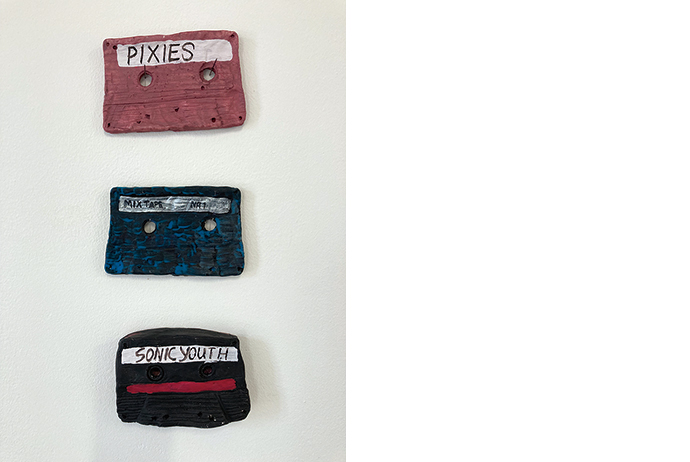
「Screaming Fields of Sonic Youth(Cassettes)」2023 アクリル/石膏 上:7.2×12.6×1cm中:8.5×12.6×1cm 下:8.5×12.4×2.5cm

Johan Svensson展
PHOTO:「The end」30×20cm acrylic on paper.


Reference
▶ Part of a report on a visit to Swedish Artist
This report was wrtitten by Azumi Okabe in 2022
岡部安曇さんが2022年にヨハン・スベンソンさんを訪問したレポートをご紹介します。

Johan Svensson

http://www.johansvensson.org

 ストックホルム市の中心部、大通りに店舗が並ぶ地下鉄Slussen駅を出て少し歩くと、緑が眩しい森の公園があり、そこを通ると閑静な住宅街に出る。似た外観の大きな建物が並ぶ一角の1階(半地下のような場所)にJohanさんのスタジオがある。ウプサラの幼稚園にパブリックアートを設置したところで、スタジオはがらんとしているけれど、パソコンで作品を見せることができるからと連絡が来ていた。
 A short walk from the Slussen subway station, where stores line the main street in the center of Stockholm, leads to a forest park with shining greenery, and through it to a quiet residential area. Johan’s studio is located on the first floor (sort of a half-basement) of a corner lined with large buildings of similar appearances. He had just installed a public artwork in a kindergarten in Uppsala, and although the studio was empty, he said he could show me his work on his computer.


 Johanさんはスウェーデン南部の小さな農村の出身だ。母親がアーティストになりたかった人で、家には母親の描いたきれいな絵が掛けてあった。早くに結婚し、子供を産んで夢を叶えられなかった母が、それをぜひ息子にというようなプレッシャーは一切なかったという。大学まで南部で過ごし、その後、建築家/アーティストである妻とともにフィンランドへ。現在はストックホルムを拠点に制作している。自分がここに来ることができたのは、IASPISの支援があったからだと聞き、IASPISの存在の大きさを改めて感じる。
 Johan is from a small farming village in southern Sweden. His mother wanted to be an artist, and there were beautiful paintings by her hanging in the house. His mother, who had not been able to fulfill her dream due to marrying early and having children, never pressured him to do the same. And eventually he took a path that his mother couldn’t take. He spent his college years in the South and then moved to Finland with his wife, an architect/artist. He is currently based in Stockholm. He says that he was able to come here because of the support of IASPIS, and I learned once again the importance of IASPIS.

「心の中の仄暗い場所に体を浸しながら、時々浮かんでくる生き物」
“A creature that sometimes floats around, dipping its body into a dark place in the mind”

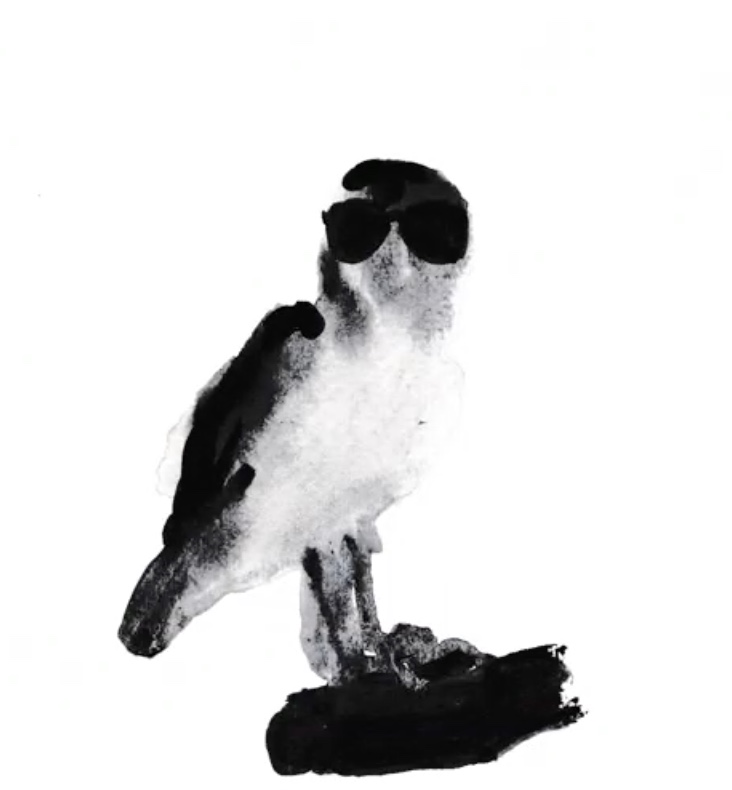
 Johanさんを訪問したいと思ったのは、Johanさんのウェブサイトのトップページにある、印象的なサングラスを掛けたカラスのドローイングに惹かれたからだ。それは「NIGHT TIMES」というタイトルの展覧会のために制作されたドローイングだった。
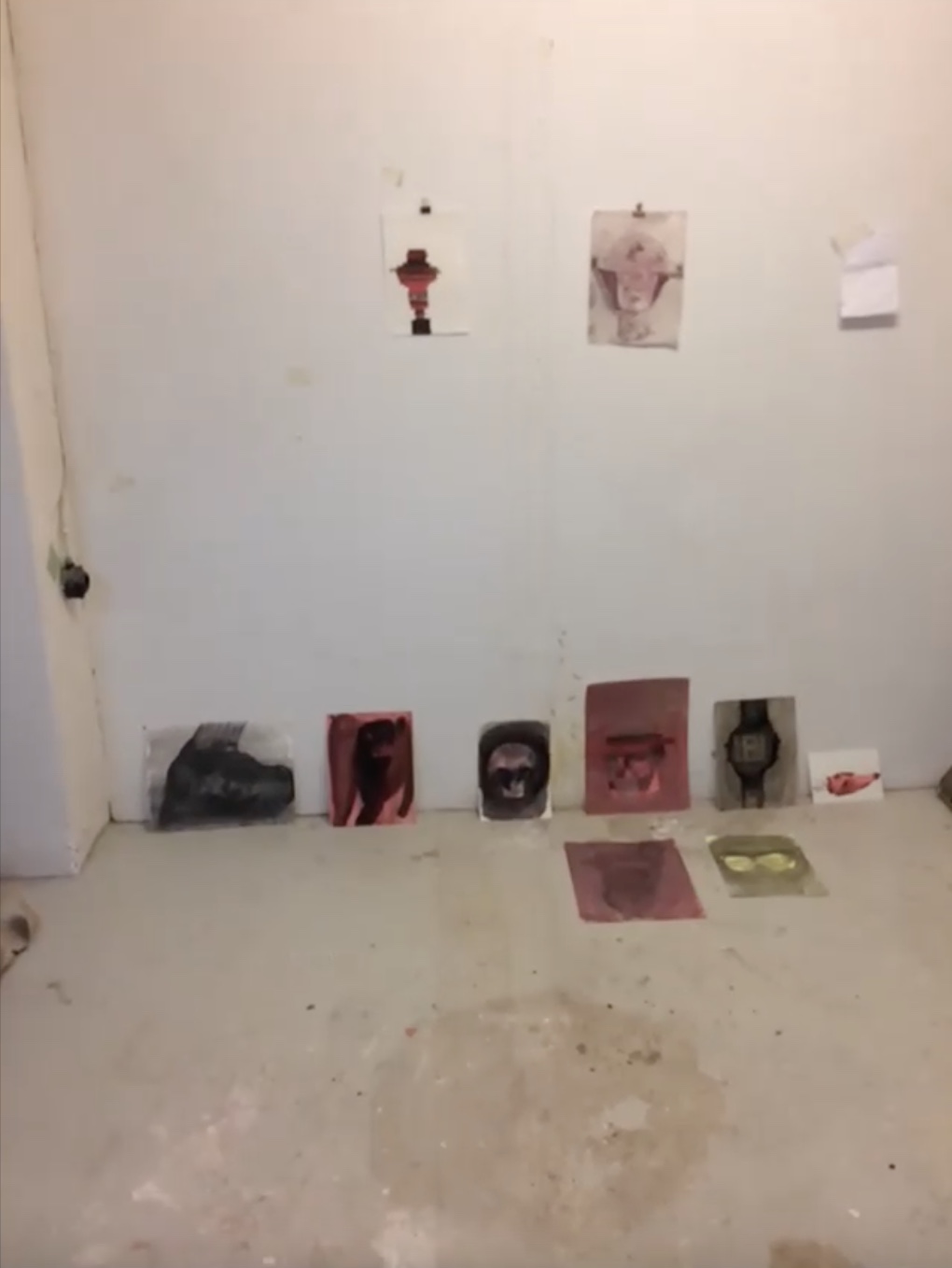
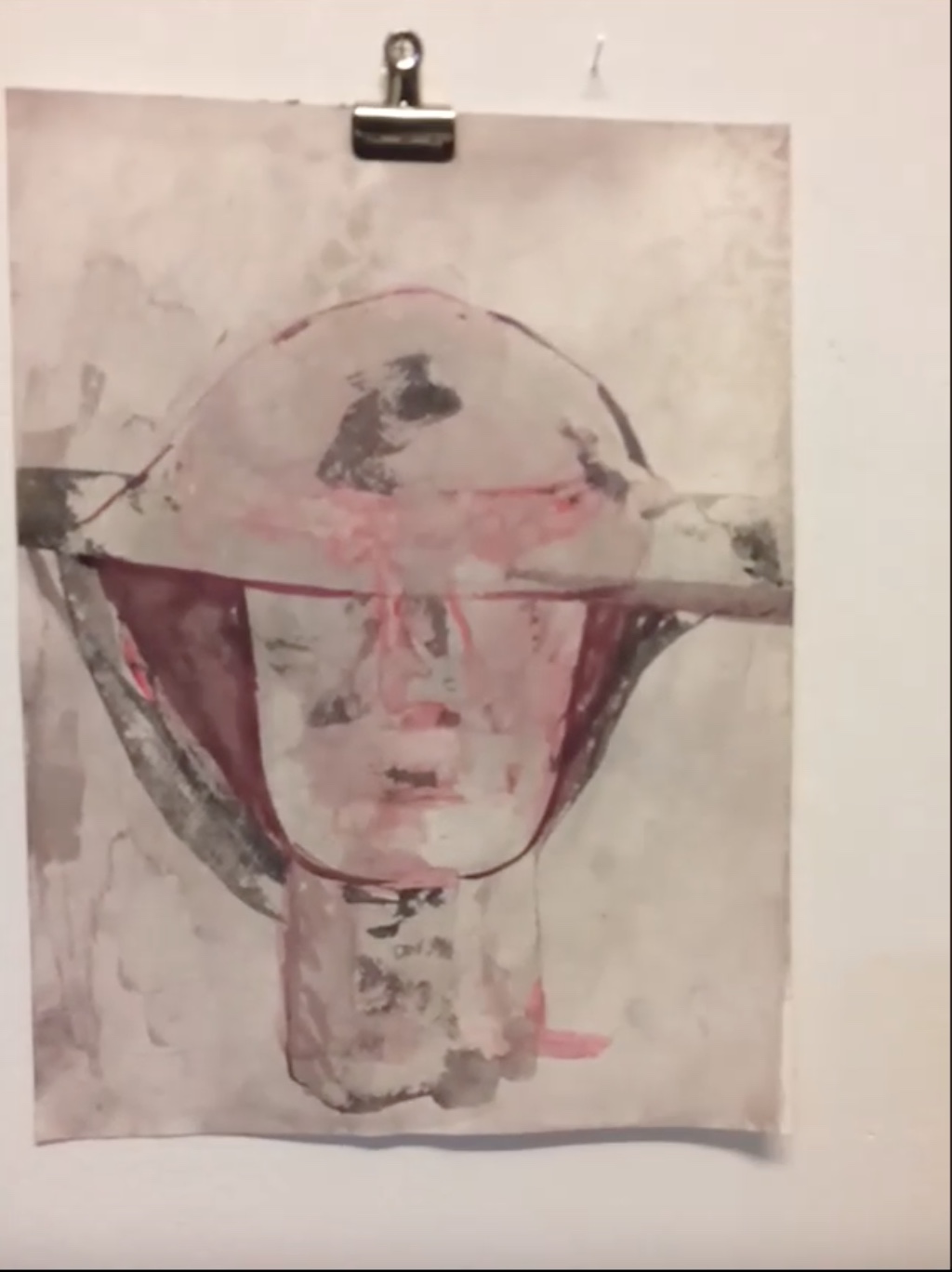
 Johanさんは落書き小僧だ。短時間にドローイングやペインティングをたくさん描く。繰り返し描いては、その発展を見る。
 面白い展開になることもあれば、そうでないことも多い。テーマがあることもあるが、何が出てくるのか、どうなるのかわからないのは一緒で、通常は現れたどの絵も批評はせず、振り返るのは展覧会のための作品を選ぶときだ。 
 We wanted to visit Johan because we were attracted by the striking drawing of a crow wearing sunglasses on the top page of his website. It was a drawing created for an exhibition titled “NIGHT TIMES.”
 Johan is a doodler. He creates a lot of drawings and paintings in a short period of time. He draws repeatedly and watches them develop.
 Sometimes it develops in an interesting way, often not. Sometimes there is a theme, but it is the same, not knowing what will emerge or how it will turn out. He usually does not critique any of the drawings that appear, and only looks back when he chooses a work for an exhibition.


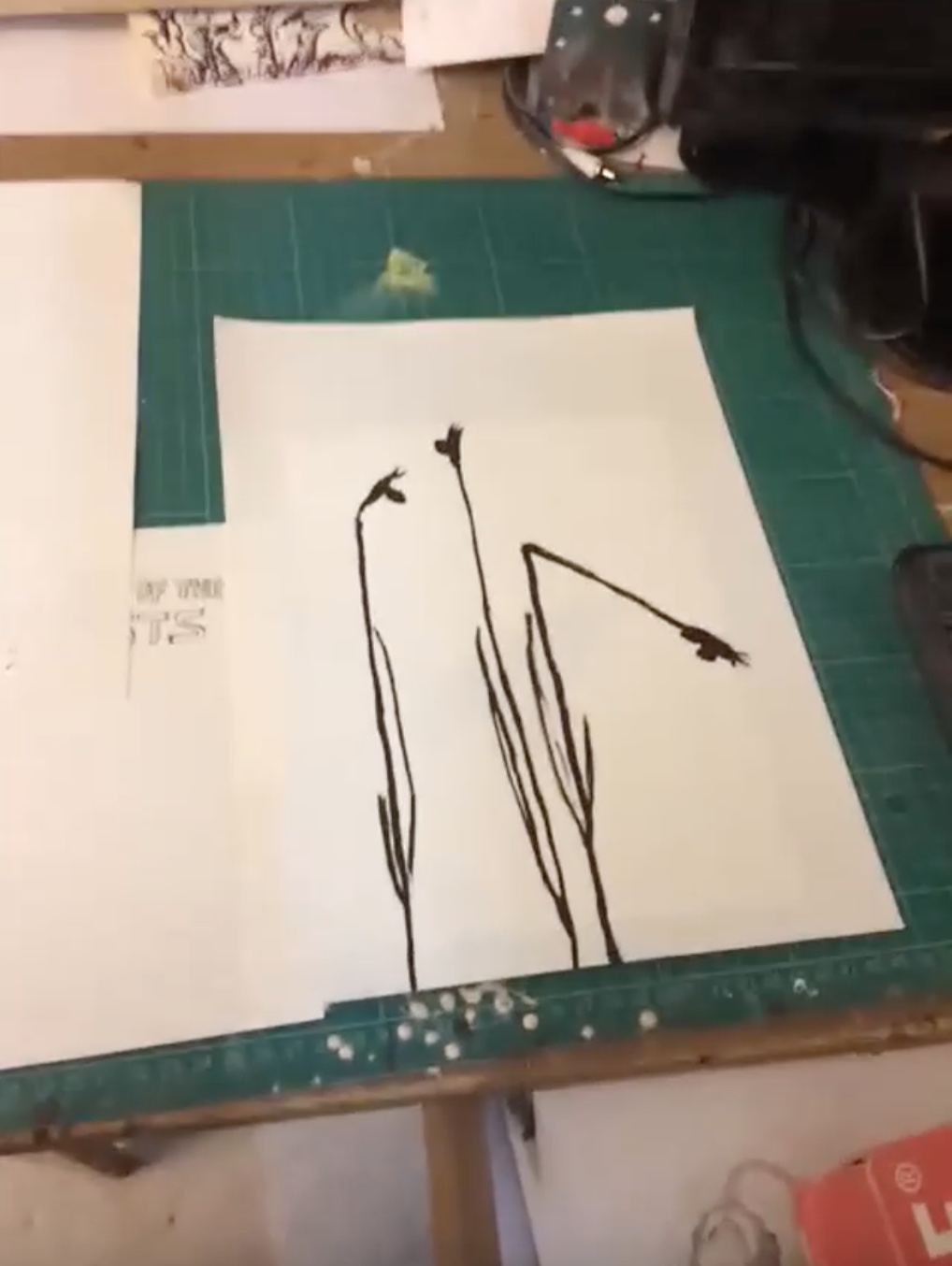
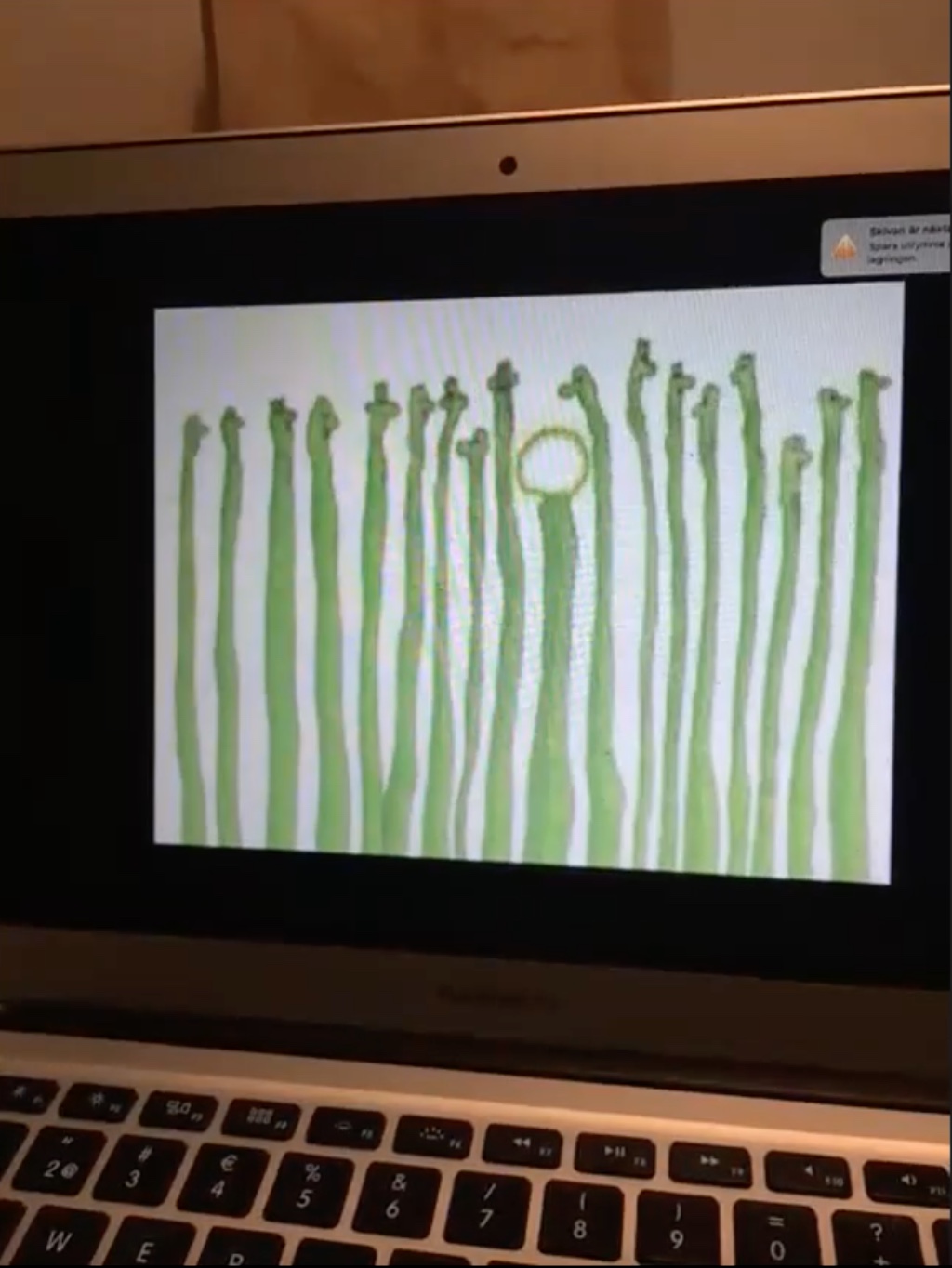
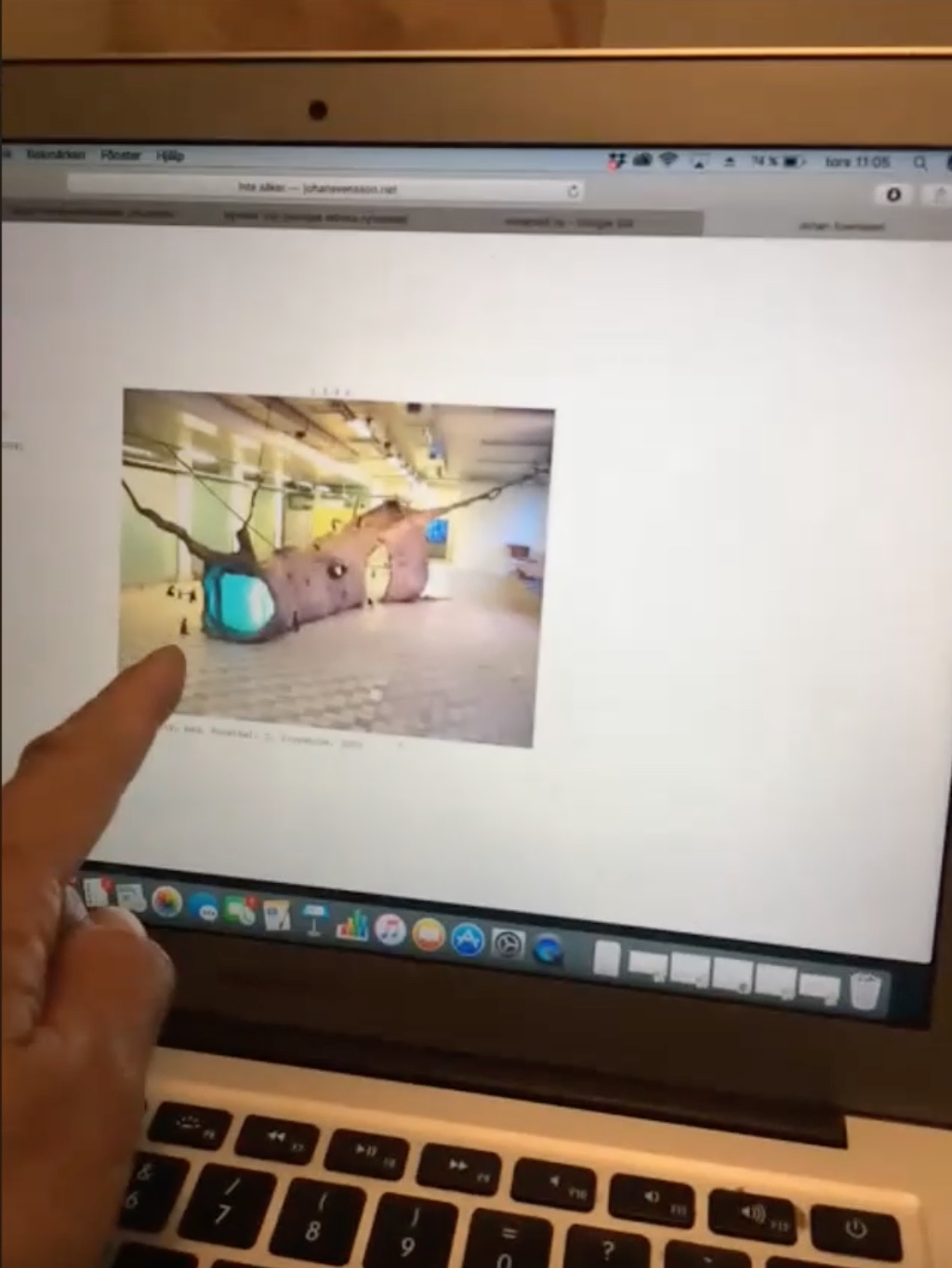
 自然発生的なドローイングからアニメーションが生まれることもある。近作「Grass」がそれで、芝が伸びやかに生長し、風に気持ちよさそうに揺れる。と、大きなタイヤ(草刈車)がやってきて、短く刈り取られてしまう、という短編だ。この映像は、大きな木を寝かせたように配置したインスタレーション作品の、根に当たる部分に透明なフィルムを提げて、そこに繰り返し映写するという方法で展示した。木の周りには、ネズミの立体が配置され、絵本の世界の実写版のようだ。
 Sometimes spontaneous drawings give birth to animations. In a recent work, “Grass,” the grass is growing and swaying in the wind. Then, a big tire comes along and mows it down. This video was shown by repeatedly projecting a transparent film onto the roots of a large tree that was placed in a lying position in the installation. Arranged around the tree were three-dimensional mice, like a live-action version of the world of a picture book.


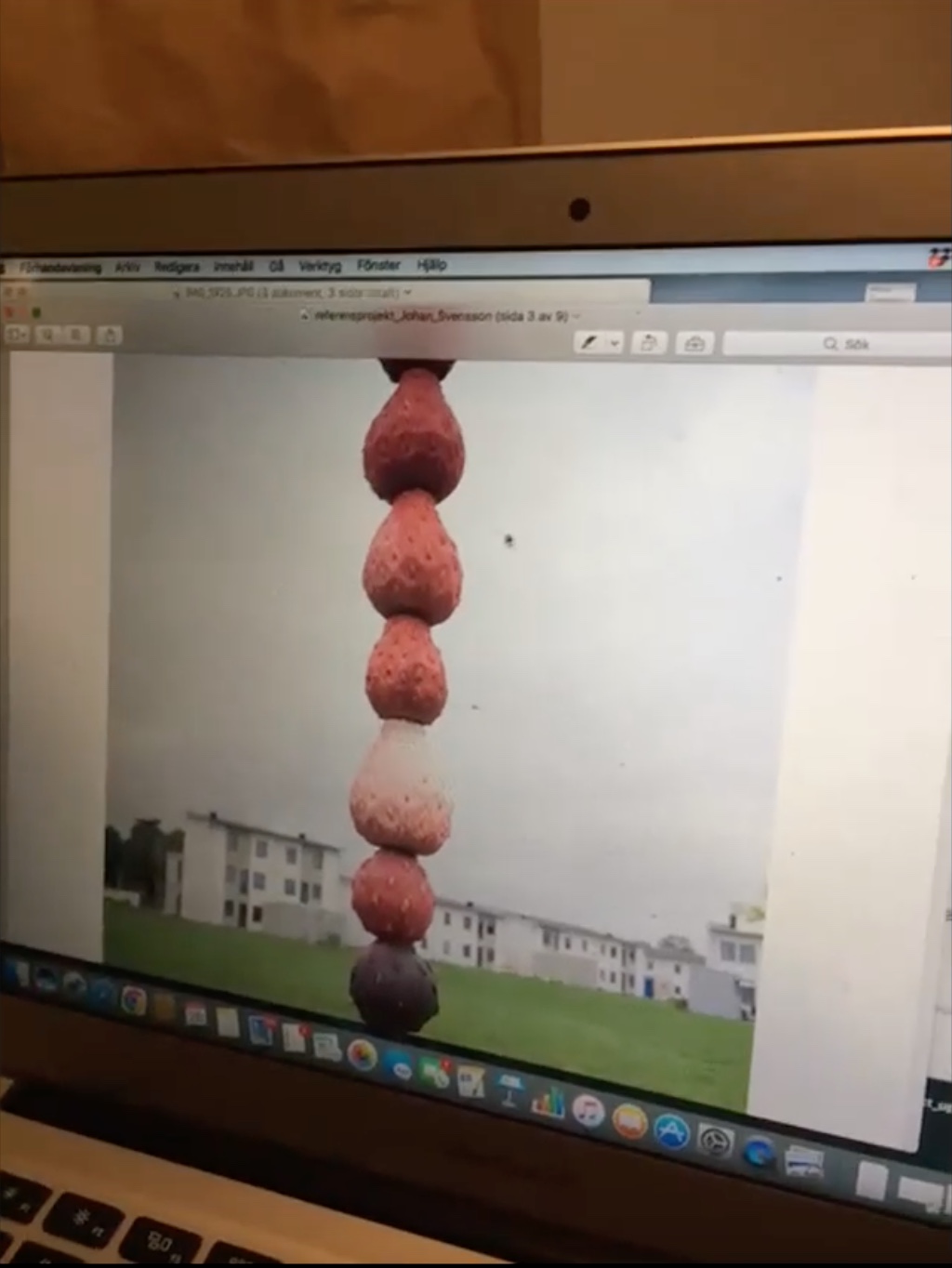
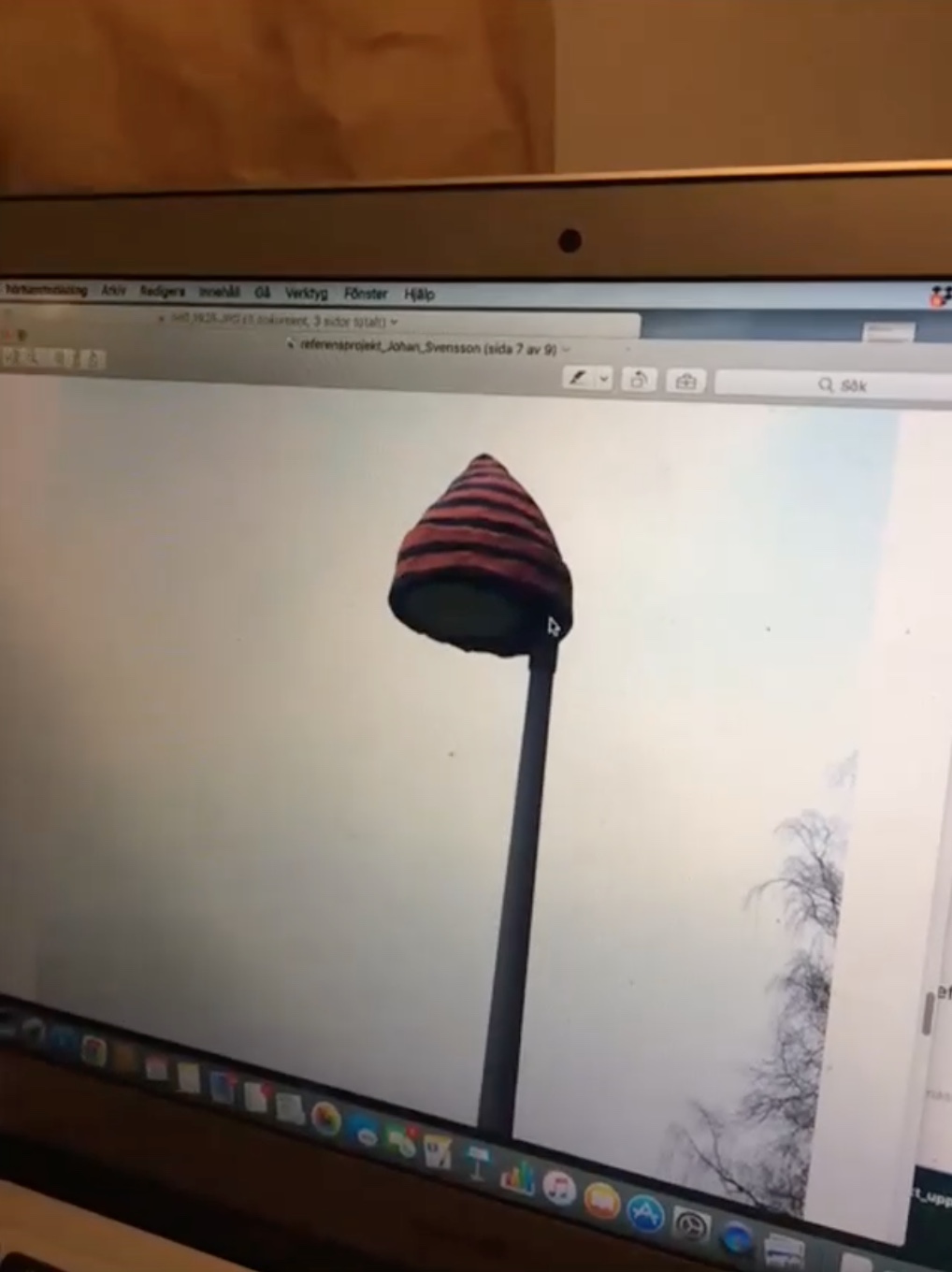
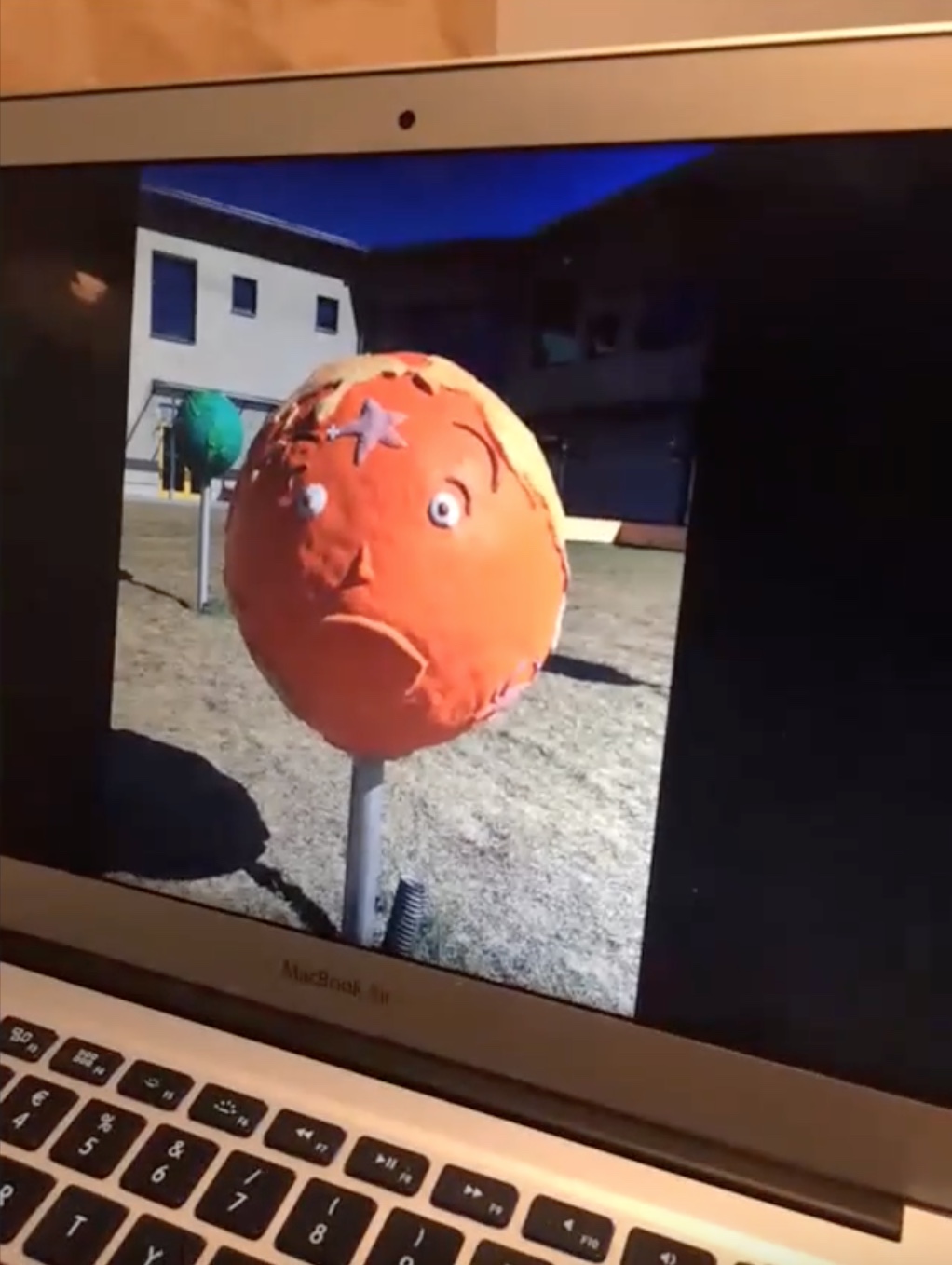
 子供からも大いに好かれそうなJohanさんの作品は、なるほど、3カ所の幼稚園や住宅地の広場にパブリックアートとして設置されている。串刺しにした野苺のシロップがけ(スウェーデンのおやつ)を巨大にした立体や、街灯の灯りを覆う部分が、ニット帽やキャップになっている作品。「驚怒哀楽」を地球に見立てた四つの球体に、それぞれ四つの感情を表した表情をつけて、高さと色を変えて設置した立体作品など、どれも思わず頬が緩むものばかりだ。
 Johan’s work, which seems to be well-liked by children, has been installed as public art in three kindergartens. There is a giant three-dimensional sculpture of skewered wild strawberries in syrup (a Swedish sweet), and a work in which the part covering the light of a street lamp is a knit hat or cap. Four spheres, each with an expression representing four different emotions; surprise, anger, pleasure and sorrow – were installed at different heights and in different colors.


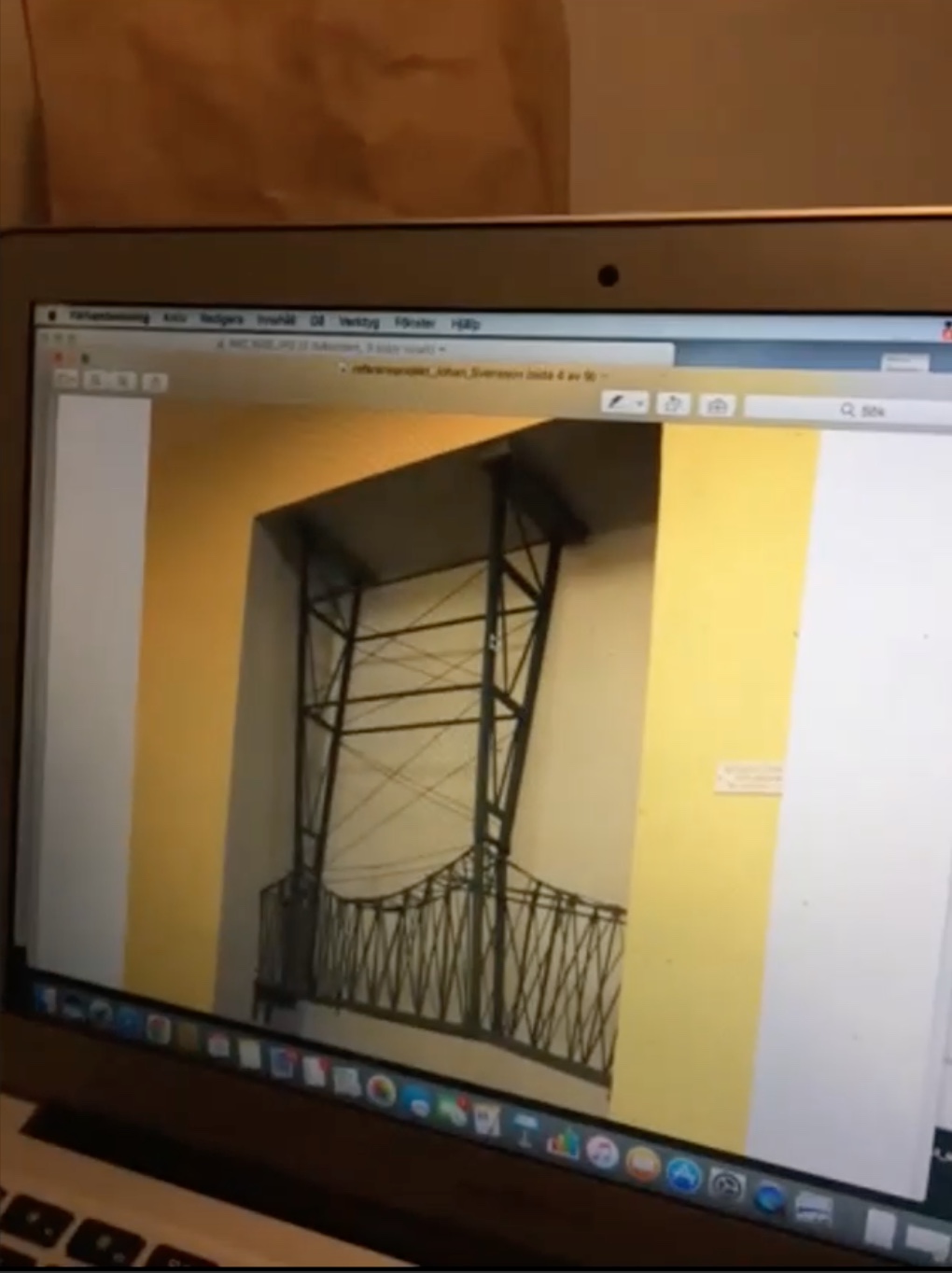
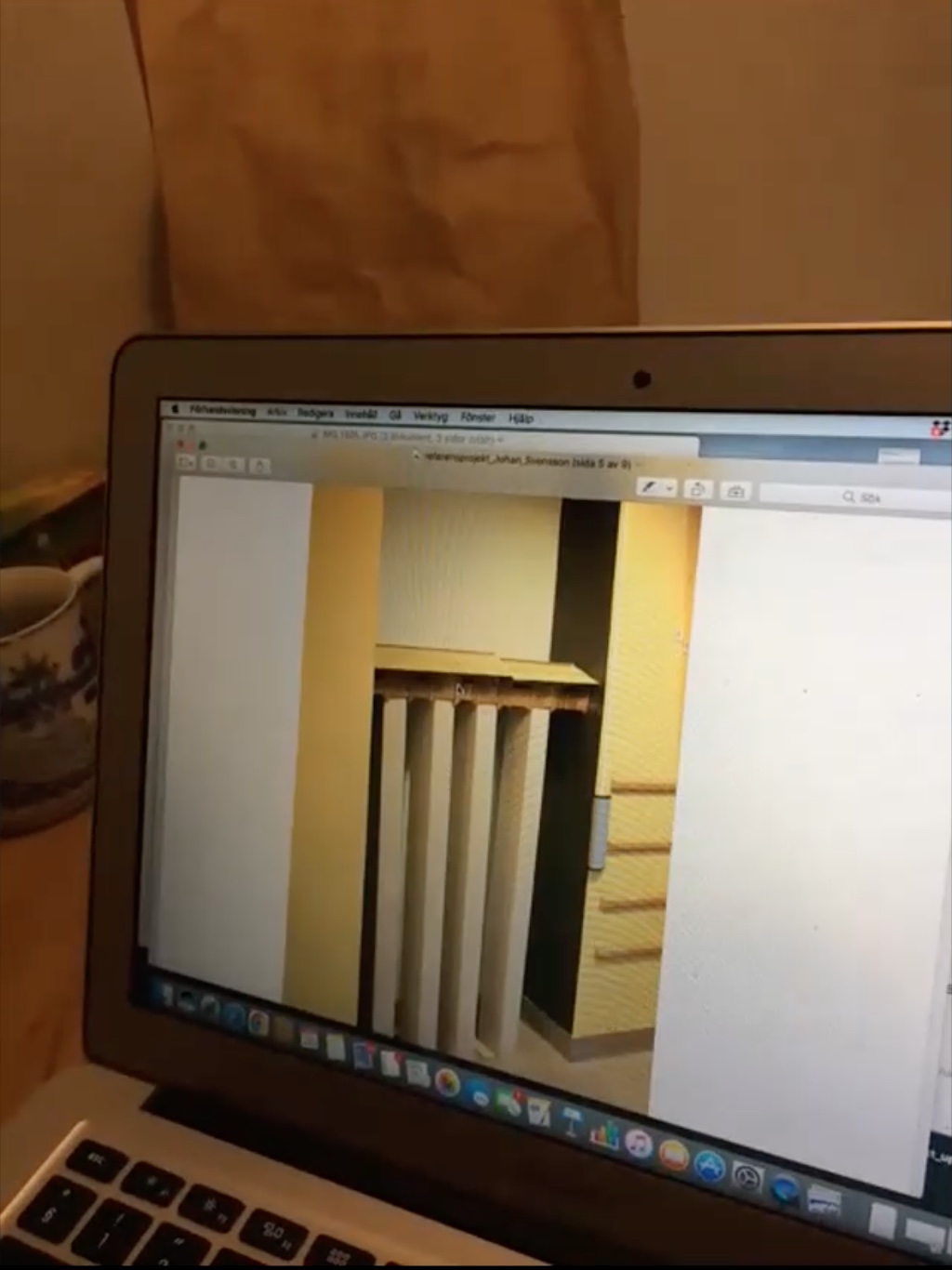
 一方で、一番最初に取り組んだパブリックアートは、余命いくばくの人が静かに最期の時間を過ごすホスピスのための作品で、あの世とこの世を繋ぐ三つの「橋」を制作。構造が美しい立橋、タイで見られる家付きの橋、そして、古い映画からイメージを得た吊り橋だ。利用者に配慮し、あまりハードなものにならないように気を配って制作した。
 On the other hand, the first public artwork he worked on was for a hospice where people with little time left to live spend their final days in peace and quiet, and he created three “bridges” connecting this world and the next. Three “bridges” were created to connect the afterlife and the real world: a standing bridge with a beautiful structure, a bridge with a house as seen in Thailand, and a suspension bridge inspired by an old movie. The artist took care not to make the bridges too severe for the viewers.


「心の中の仄暗い場所に体を浸しながら、時々浮かんでくる生き物のよう」とは、大倉さんが評したJohanさんの印象だが、本当にそのとおりだ。見上げるほど背が高く、物静かで控えめだが、心の中の仄暗い場所で、ずっと絵を描いている少年Johan君がいて、ちょっと辛辣に、ちょっとニヒルに物事を見つめている。そのJohan君が、Johanさんの目の奥からこちらをじっと覗いている。そんなふうに感じた。人を惹きつける不思議な魅力のある人だ。
 Okura’s impression of Johan is that he is like a creature that sometimes floats around, dipping its body into a dark place in the mind, and he is absolutely right. Johan is tall, quiet, and reserved, but in a dark place inside his mind; there is a boy named Johan who has been drawing pictures for a long time, looking at things with a bit of a wry, slightly nihilistic attitude. He is peering at us from behind Johan’s eyes. That’s how I felt. He and his work have a mysterious charm that attracts people.


本レポートの全文はつぎのアドレスでお読みいただけます

ギャラリー&ミュージアムマップ 2024.5/20~6/25

展覧会を見に行こう!
2008年創刊、毎月無料配布の展覧会情報紙です。

新潟島とその周辺のギャラリー&ミュージアムマップ
Gallery & Museum Schedule 2024.04-05

2024年5月20日(月)- 6月25日(火)

ギャラリー&ミュージアムマップ 2024年5月-6月号

チラシのダウンロード(PDF)

ギャラリー&ミュージアムマップ 2024年5月-6月号


チラシのダウンロード(PDF)

本紙 配布場所のご案内

中央区 aigallery、ニカイギャラリー、STACK-BOARDアートギャラリー万代島ギャラリー長美堂、メディアシップ、hickory03travelers蔵織コンチェルト・西堀ゆきわ、にいがた銀花医学町ビル、医学町画廊、 新潟美術学園、あらきギャラリー、羊画廊、新潟絵屋、万代島美術館敦井美術館新潟市美術館砂丘館NSG美術館ゆいぽーと、篠田桃紅作品館、北方文化博物館新潟分館あさひまち展示館旧齋藤家別邸旧小澤家住宅みなとぴあ知足美術館、新潟駅観光案内所、なり、五徳屋十兵衛、クロスパル、シネ・ウインド、三宮商店、ナガイ画材、器、SWAN、パルム、涼蔵、竹野、ノ縞屋、新潟県民会館、新潟デザイン専門学校、市民活動支援センター、ホテル日航新潟、りゅーとぴあ、NHK文化センター、峰村醸造直売店、今代司酒造、新潟大学駅南キャンパスときめいと、絵画教室ウニアトリエ、新潟県立生涯学習推進センター、栄楽亭、エフスタイル、i media専門学校、アートホテル新潟、北書店

北区 楓画廊てんゆう花、nico、ビュー福島潟、ARTギャラリーHAFU
東区 She is、巻菱湖時代記念館、フォトスタジオHOX
南区 SHIRONE PRESSO
江南区 小さな美術館季、エムスタジオ、北方文化博物館
秋葉区 やまぼうし三方舎新潟市新津美術館
西区 雪梁舎美術館ギャラリー潟道
西蒲区 浜つばきギャラリー野衣、いわむろや

新発田市 清水園
胎内市 胎内市美術館
村上市 Toi陶房(瀬波温泉)
柏崎市 游文舎gallery tanne(谷根)グルグルハウス高柳
長岡市 たびのそら屋県立近代美術館、長岡造形大、栃尾美術館
見附市 ギャラリーみつけ
燕市 燕市産業史料館gallery SAI、ツバメコーヒー
三条市 D+5 ART、三条ものづくり学校
栃尾市 栃尾美術館
弥彦村 弥彦の丘美術館

田中秀美 展 ~妖精(花)たちのささやき~

5/16[木]― 29[水]

作家在廊日:5/16、18、25、26、29(予定)
niigata eya exhibition 670

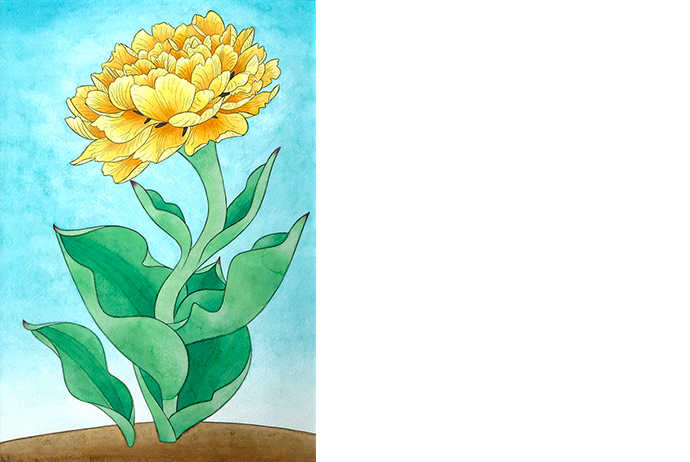
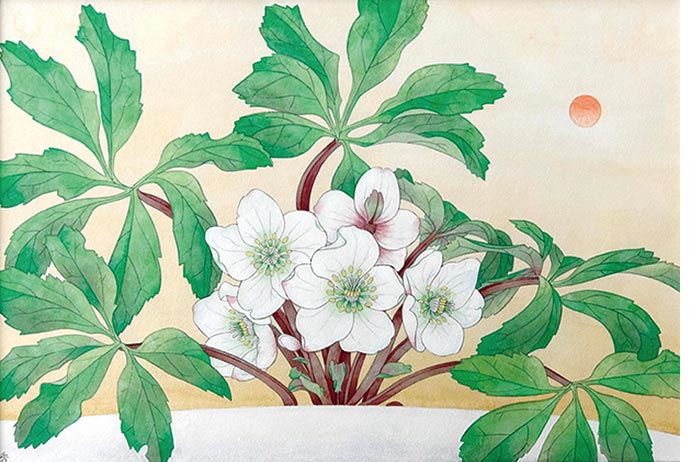
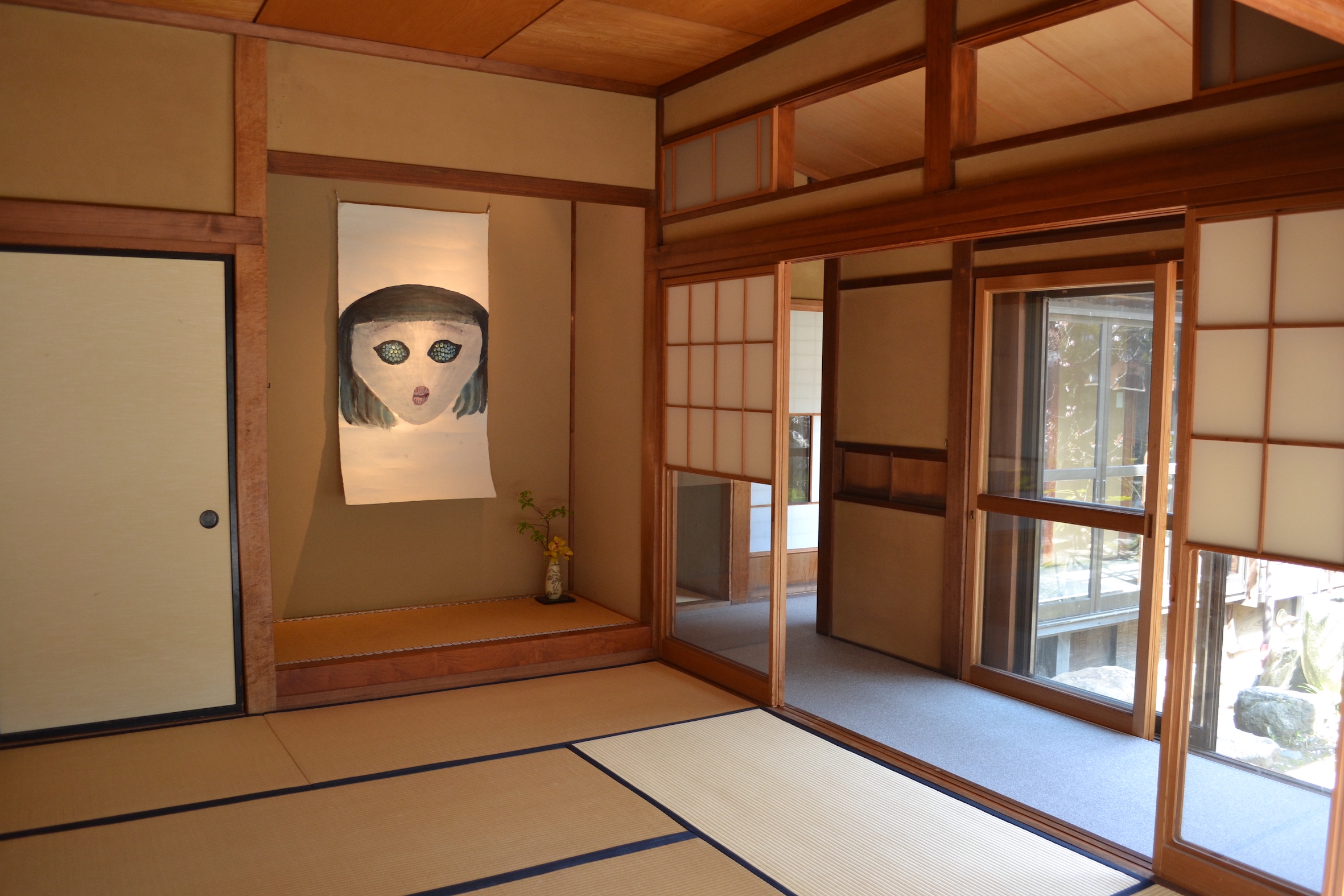
 作品展のたびに力をつけている画家田中秀美。打ち合わせに伺った折、自宅裏の堤防の桜並木が目に留まった。きっと見事な桜が咲くのだろう。歴史ある静かな町長岡市与板の自然に恵まれ、植物を好きなように育てられる環境に日々感謝しながら描き続けているという。彼女が育てた花々が鉢植えされ、今年も季節ごとに「私を描いてちょうだい」と声を掛けてくることだろう。花に向き合う姿勢は丁寧で優しい。自然や植物に接する姿は作家自身の生き方だと思う。太神楽椿、イエローポンポンネット(チューリップ)、クリスマスローズなど約20点を展示する。〈企画者:横木裕子〉

Hidemi Tanaka Exhibition- Whispers of Fairies (Flowers)

Hidemi Tanaka is a painter who has been improving with each exhibition of her works. When I visited her for a meeting, a row of cherry trees along the embankment behind her house caught my eye. I am sure that the cherry trees would bloom magnificent. Blessed with nature in the quiet, historic town of Yoita, Nagaoka City, she continues to paint while being grateful for the environment that allows her to grow plants as she pleases. And these flowers would be asking her, “Please paint me,” again this year, season after season. Her attitude toward flowers is polite and gentle. The way she treats nature and plants is a way of life for the artist. About 20 pieces will be exhibited, including Daikagura camellia, Yellow Pomponette (tulips), and Christmas roses. (Exhibition Planner: Yuko Yokoki)

田中秀美(たなか ひでみ)
長岡市生まれ。2000年頃から自己流に描きはじめる。新潟絵屋では2005年と07年に銅版画の個展を開催。その他、ギャラリー沙蔵、たびのそら屋(長岡市)、今井美術館(見附市)、ギャラリーやまぼうし、二代目アートサロン環(新潟市)などで個展。長岡市美術協会会員。市展入賞 4 回、芸展入賞。 植物を丹念に観察することにより、心の中に滲み出てくる何か、を表現できる楽しさを大切に創作を続ける。長岡市与板在住。ブログ「つるつるにんじんの豆絵画館」ameblo.jp/douganebuibui9

Hidemi Tanaka
Born in Nagaoka City, Tanaka began painting on her own around 2000. She held solo exhibitions of copperplate prints at Niigata Eya in 2005 and 2007. She has also held solo exhibitions at Gallery Sakura, Tabinosoraya (Nagaoka City), Imai Museum of Art (Mitsuke City), Gallery Yamaboshi, and Nidaime Art Salon Kan (Niigata City), and others. Member of Nagaoka City Art Association. She has won prizes at the Nagaoka City Art Exhibition (Shiten) four times and at the Nagaoka Prefectual Art Exhibition (Geiten). She continues to paint and cherishes the pleasure of being able to express something that seeps out of her mind through careful observation of plants. Lives in Yoita, Nagaoka City. Blog “Tsuru Tsuru Ninjin no Mame Kaigakan” ameblo.jp/douganebuibui9

PHOTO(上): 作品「太神楽椿」2023年 岩絵具・水干絵具・アクリル/紙 28.0×40.0㎝

イエローポンポンネット
PHOTO: 作品「イエローポンポンネット」2021年 水干絵具/紙 38.0×26.2cm

田中秀美
PHOTO: 作品「ウィンターキャロル」2023年 26×38.2cm


▶ 2005年「田中秀美 銅版画展」
▶ 2007年「田中秀美 銅版画展」

About Niigata Eya

Niigata Eya Gallery
Niigata Eya is an art gallery independently operated by a group of individuals working in different genres, and was certified as a “non-profit organization (NPO)” in 2005. The Gallery is a place for artists to present their work and for viewers to encounter their expressions. The gallery’s management is dependent on the sale of art works, but in order to maintain diversity, it also relies on membership fee income as another foundation, allowing for greater flexibility in the planning of exhibitions.

What is Exhibition?
The main activities of Niigata Eya are exhibitions held in the gallery room of a renovated Taisho period(1912−1926)traditional Japanese style house. The art show is a place to introduce artworks and artists that the individual “viewer” considers “good” to a wide audience, and the exhibition planner is responsible for all aspects of the event. The offering conceived from the appreciation and evaluation of an individual, is a stage that creates a place for presentation and appreciation of artwork at a distance from the influence of “information” bias originating in the metropolitan area. The art expressions are proposed and discussed at the monthly committee meetings, and Niigata Eya provides full support for the realization of the exhibitions.
From the gallery to the outside community
We are conducting “eto” (“with paintings” in Japanese), a project to promote the creation of spaces with pictures, in the hope that daily life will become more lively by gracing your home or work space with pictures. We also publish a monthly exhibit guide, “Niigata Island and Surrounding Galleries & Museums Map,” to help visitors enjoy art work at galleries and museums.


▶︎Reference
SUPERMARKET – Stockholm Independent Art Fair 2022

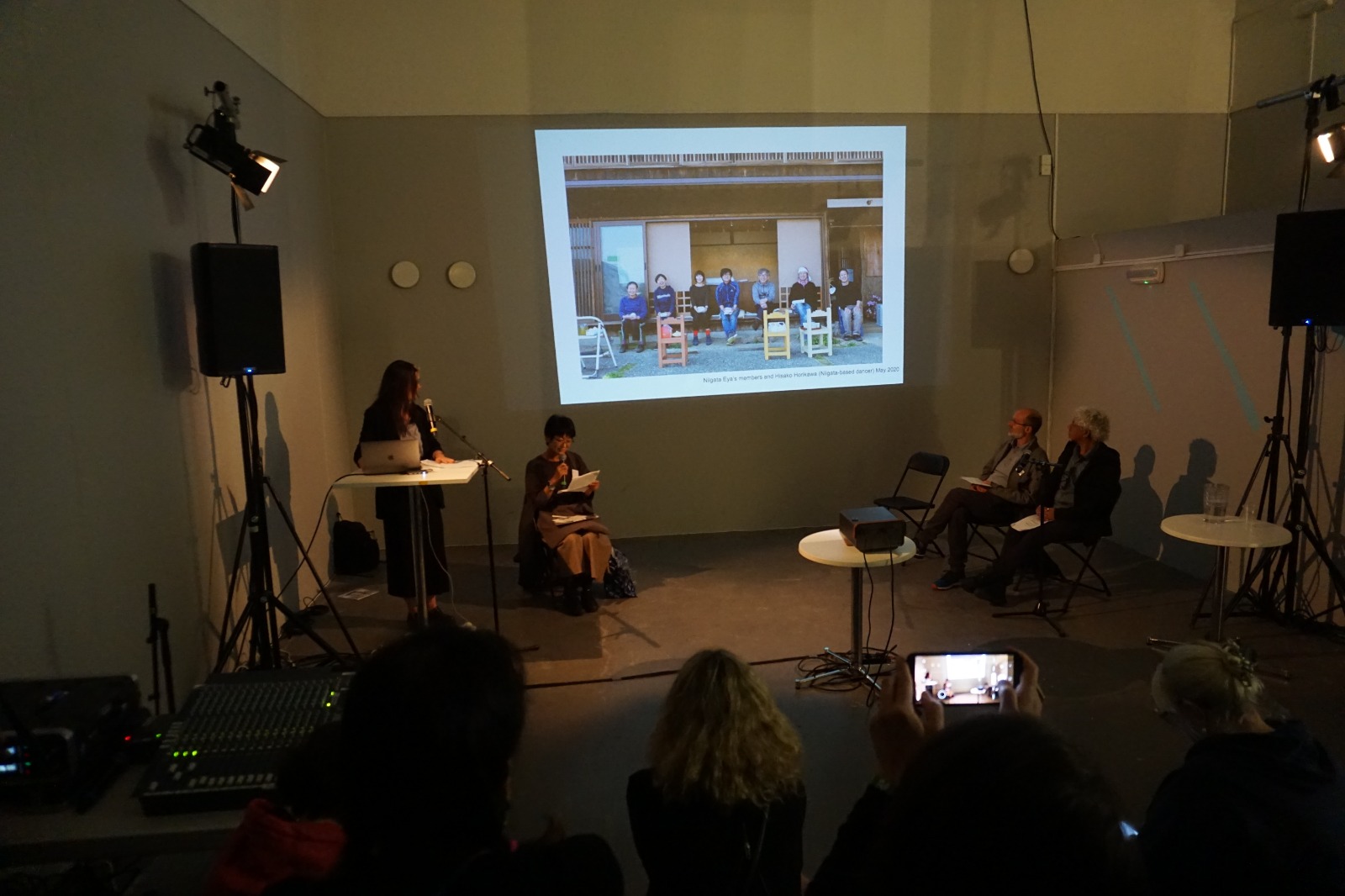
Presentation about Niigata Eya Gallery by Azumi Okabe
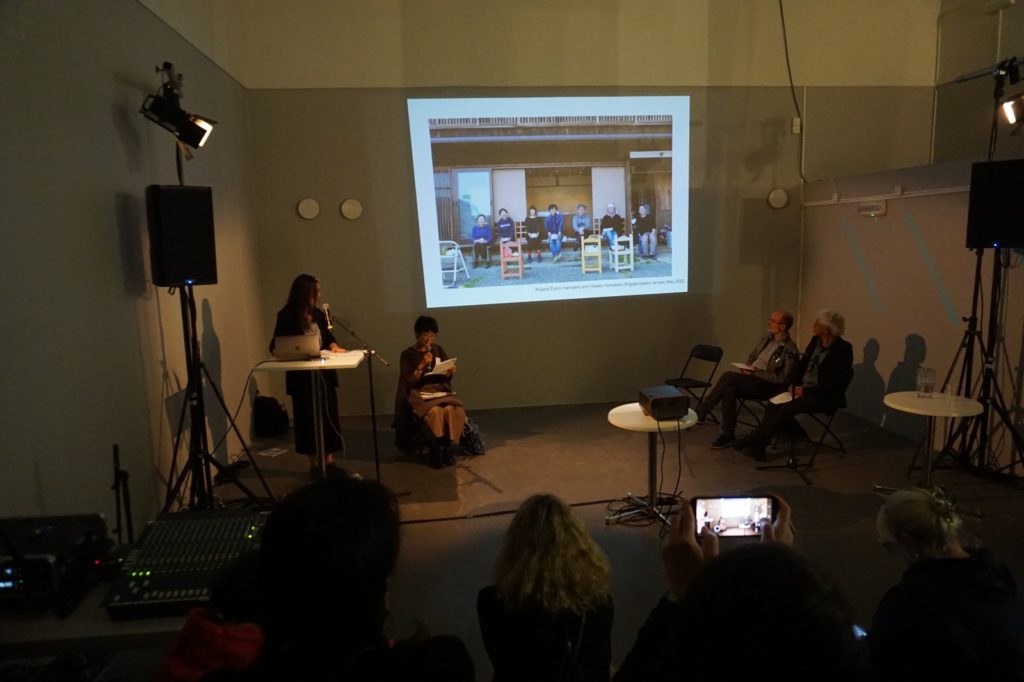

Photo:Zeynep Okyay

 “Art Shots,” which introduced each activity, was presented in a “pecha-kucha” style, in which 10 images were presented in less than one minute each. No questions were raised on this day, perhaps because the presentation ended with a brief overview of each activity. In particular, Niigata Eya is a gallery run by “viewers” rather than an artist-run gallery, and I explained that the historical background of the introduction of the term “art” was a translation of the word “Bijutsu.” However, I also thought that they might not have known what questions to ask because of the very different backgrounds. (Niigata Eya’s presentation is following)
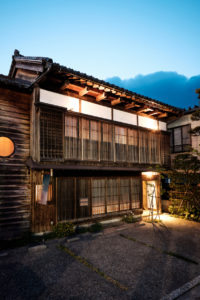

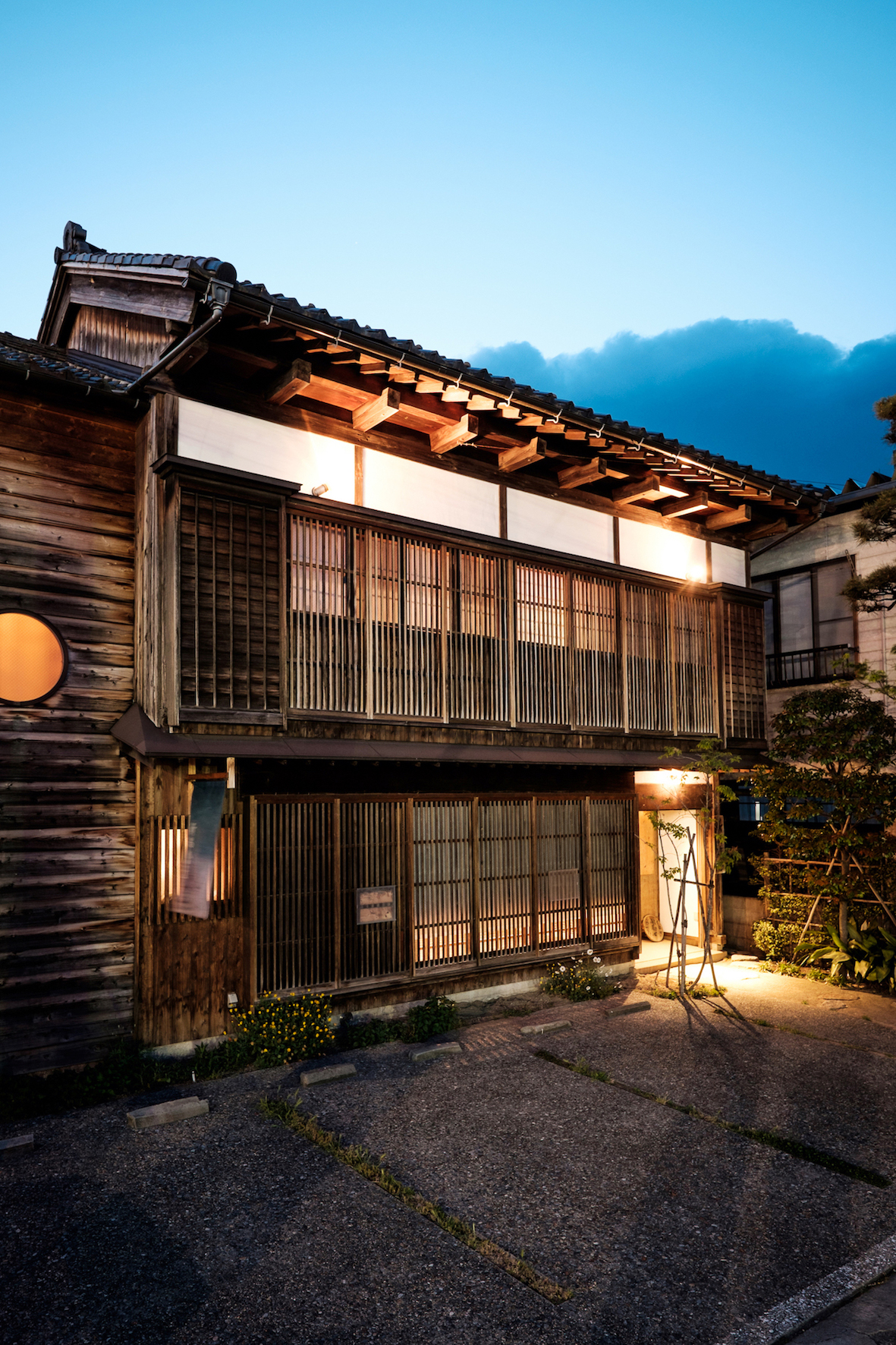
1 Niigata Eya Gallery’s building
Niigata Eya Gallery is not an artist-run gallery, it is a viewer-oriented gallery.
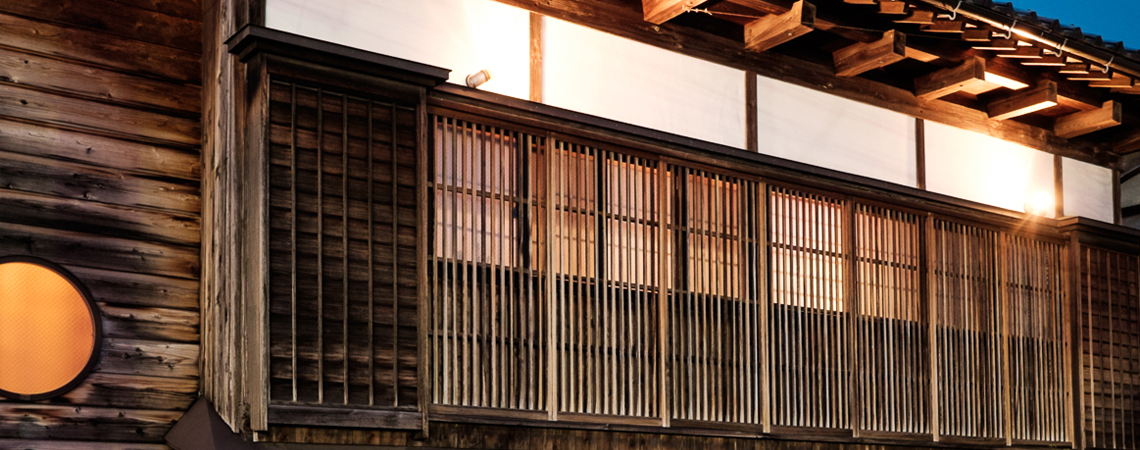
Niigata city is located in the northeastern part of Honshu Island, Japan, lying along with the Sea of Japan.As you see, the gallery’s building is a traditional Japanese style house, but the interior had been renovated in the western style. We restored the interior back to its original design. Our intent was to have a place to exhibit paintings and various other genres of art expressions, as well as, to offer them for sale, in this traditional Japanese style setting.
“Eya” means a shop that sells paintings in old Japanese language. Niigata Eya Gallery was established in 2000 by 9 members.
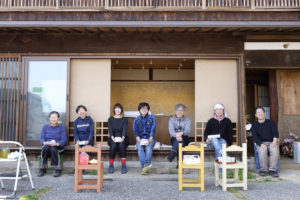

2 Niigata Eya’s members and Hisako Horikawa(Niigata-based dancer)
The members consist of a carpenter, a furniture craftsman, a Haiku poet, a graphic designer, a photographer, an art critic, and others in various fields; every single member takes charge of managing the activities, not as an artist, but as an individual viewer.
At monthly meetings, we introduce artists respectively, that we think are good, and curate exhibitions.
We have held more than 600 exhibitions with over 300 artists over 22 years.
The standard of curation is to present the art works that a Niigata Eya member appreciated and desired to feature as an individual viewer.
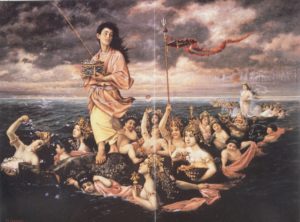

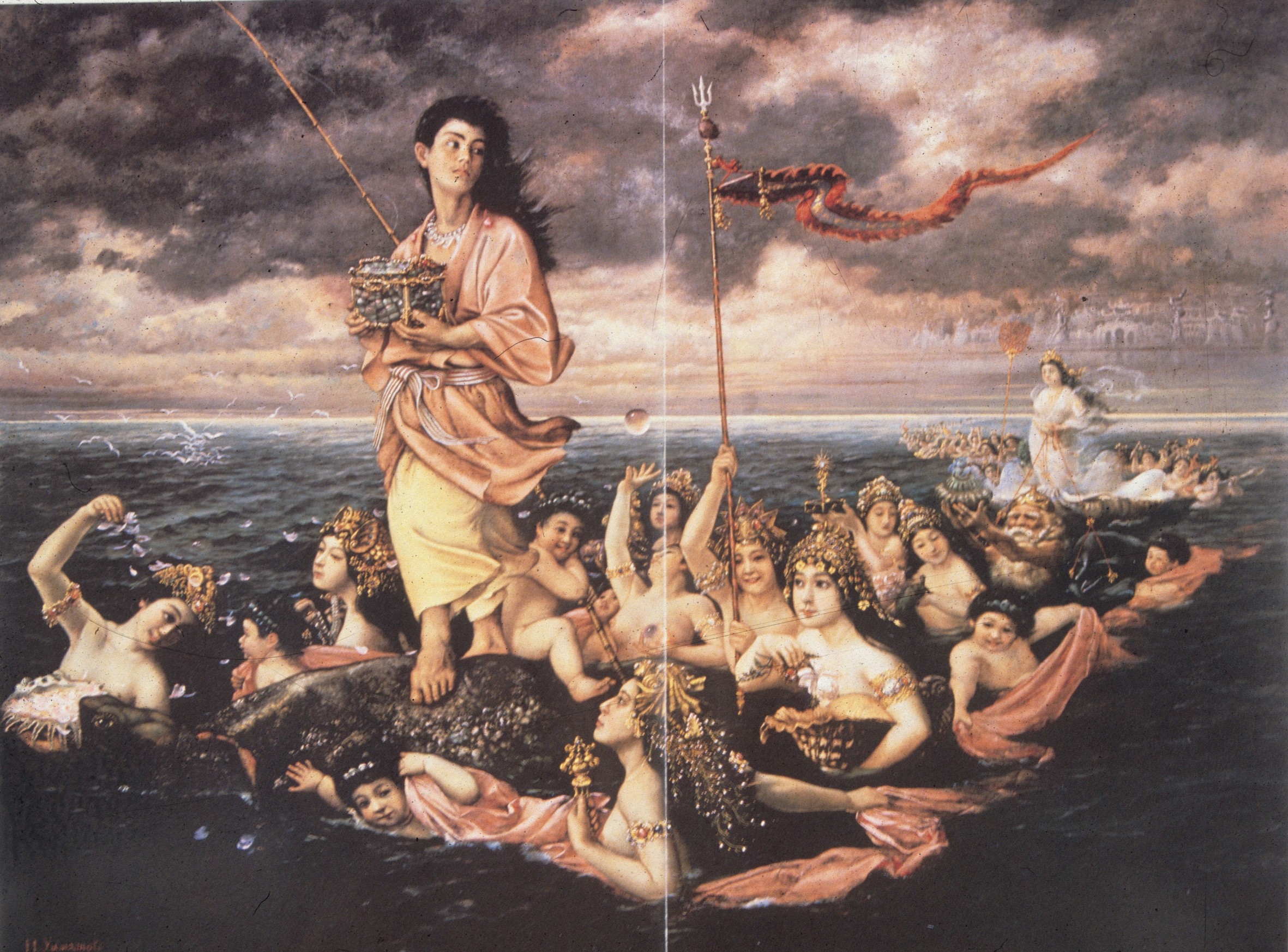
3 An Oil painting in the Meiji(1868-1912)Era_ “Urashima_zu” by Hosui Yamamoto(1895)
Art or plastic art in the Japanese language is “Bijutsu.” “Bi” means “beauty,” and “Jutsu” means “way”, ”method,” or “meaning.” Japan’s Meiji Era ran from 1868 to 1912, and “Bijutsu” was created by translation in its early years.
This new word, “Bijutsu,” produced the new social system, such as in art schools, museums and exhibitions.
This change occurred first in Tokyo, the capital city of Japan; thus, Tokyo is considered the source of everything new as it is the mega introduction place of Western culture.
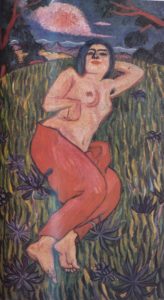

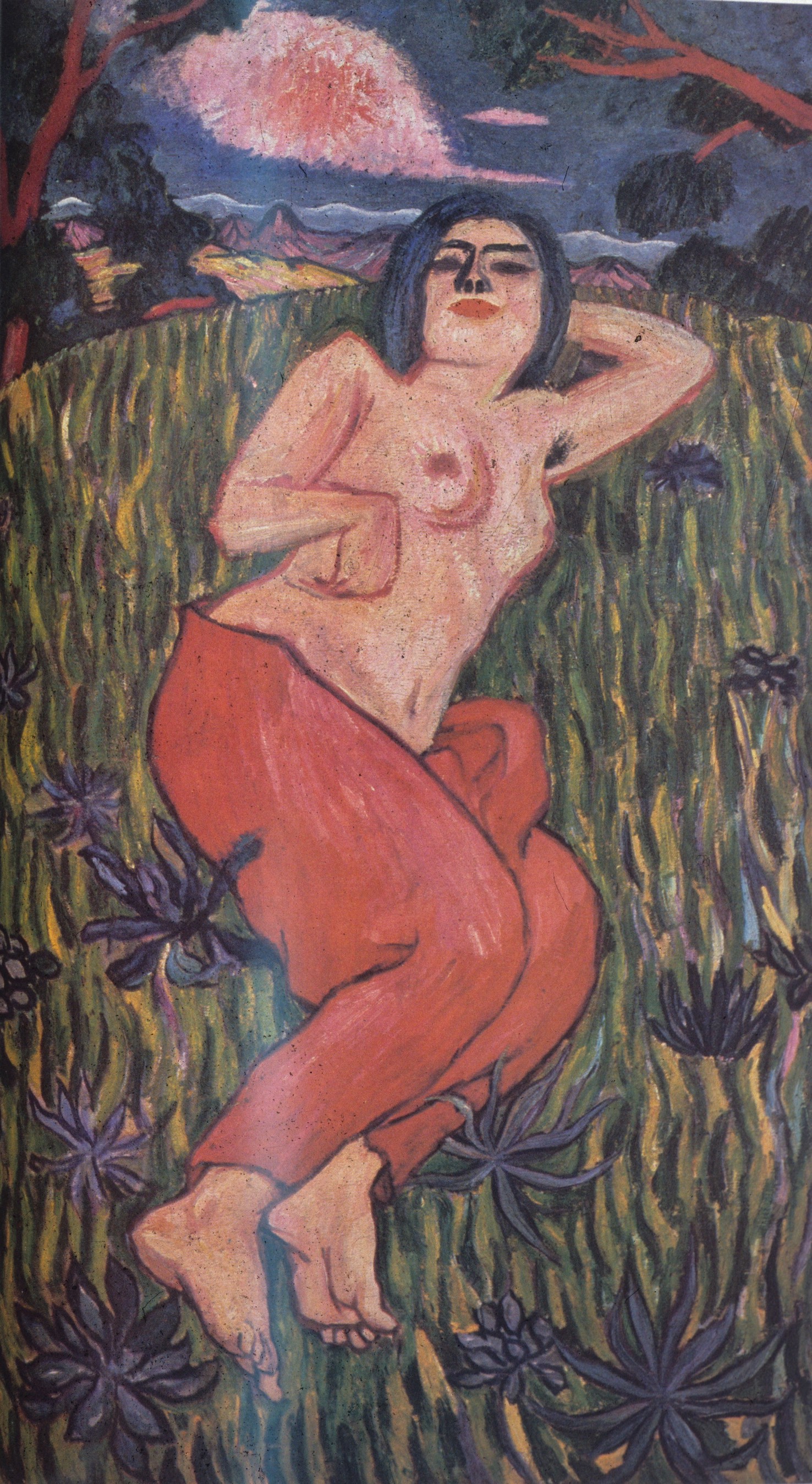
4 A Painting in the Taisyo (1912-26)Era_”Nude Beauty” by Tetsugoro Yorozu(1912)
Soon after the word “Bijutsu” was coined, the drastically changing era, the 20th century started, and revolutionary art works showed up one after another; they appeared in Tokyo rapidly. Especially Van Gogh was introduced to art-lover youths by a literature group named the “Sirakaba group;” this dramatically spread the concept that Bijutsu to not only mean the creation of beauty but also it is about self-expression.
This thought had a huge impact on art expression in Japanese people and it extended the range of “beauty;” but also it confused viewers who look for “beauty” in art pieces.
As a result, it was believed that “only art specialists could appreciate and understand the art.” This mind- set prevailed among ordinary people.
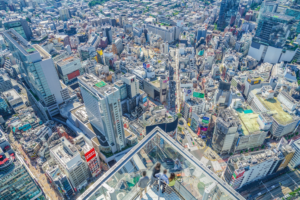

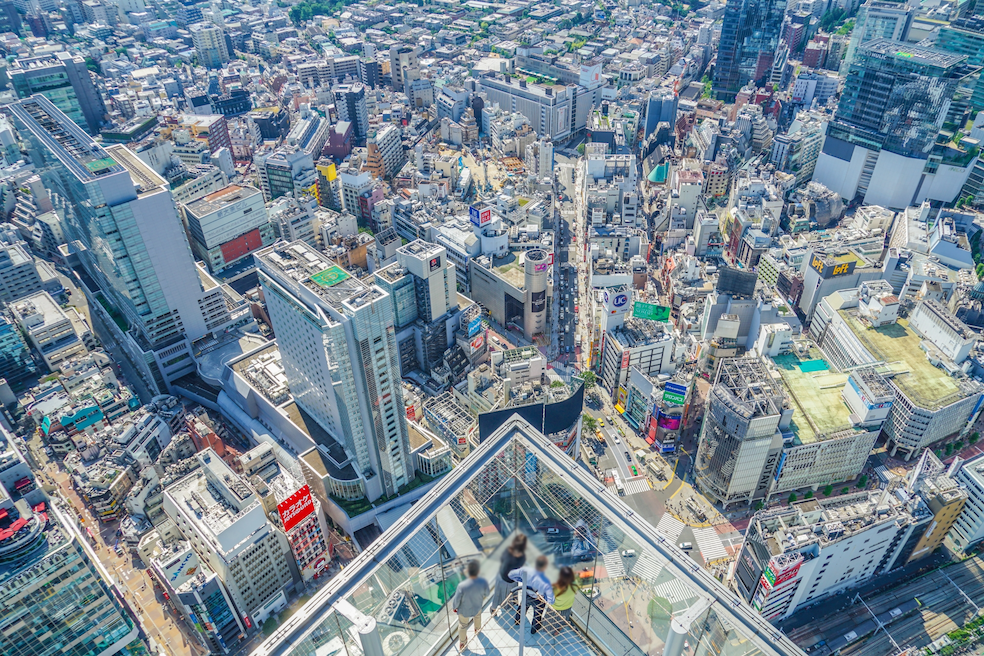
5 Tokyo scenery
Then, people aiming toward art expression went to Tokyo, created in Tokyo, and exhibited in Tokyo.
In the late Maiji era, the exhibitions started to be presented by the national government, which was mimicking the Salon in France.
Private competitions also began, and these became a hierarchical system.
Climbing up the pyramid of hierarchy became equivalent to gaining social prestige.
In this era, the people left behind the most were the viewers who appreciate the arts but lived in other areas than Tokyo.
They judged art expressions under the mind-set of following what others said. Appreciating art meant going to the museum to see so-called famous artists’ works. This practice became the norm.
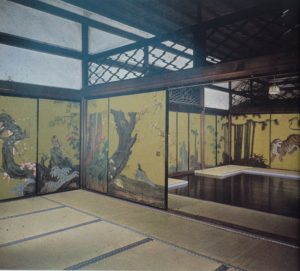

6 Interior of an old temple
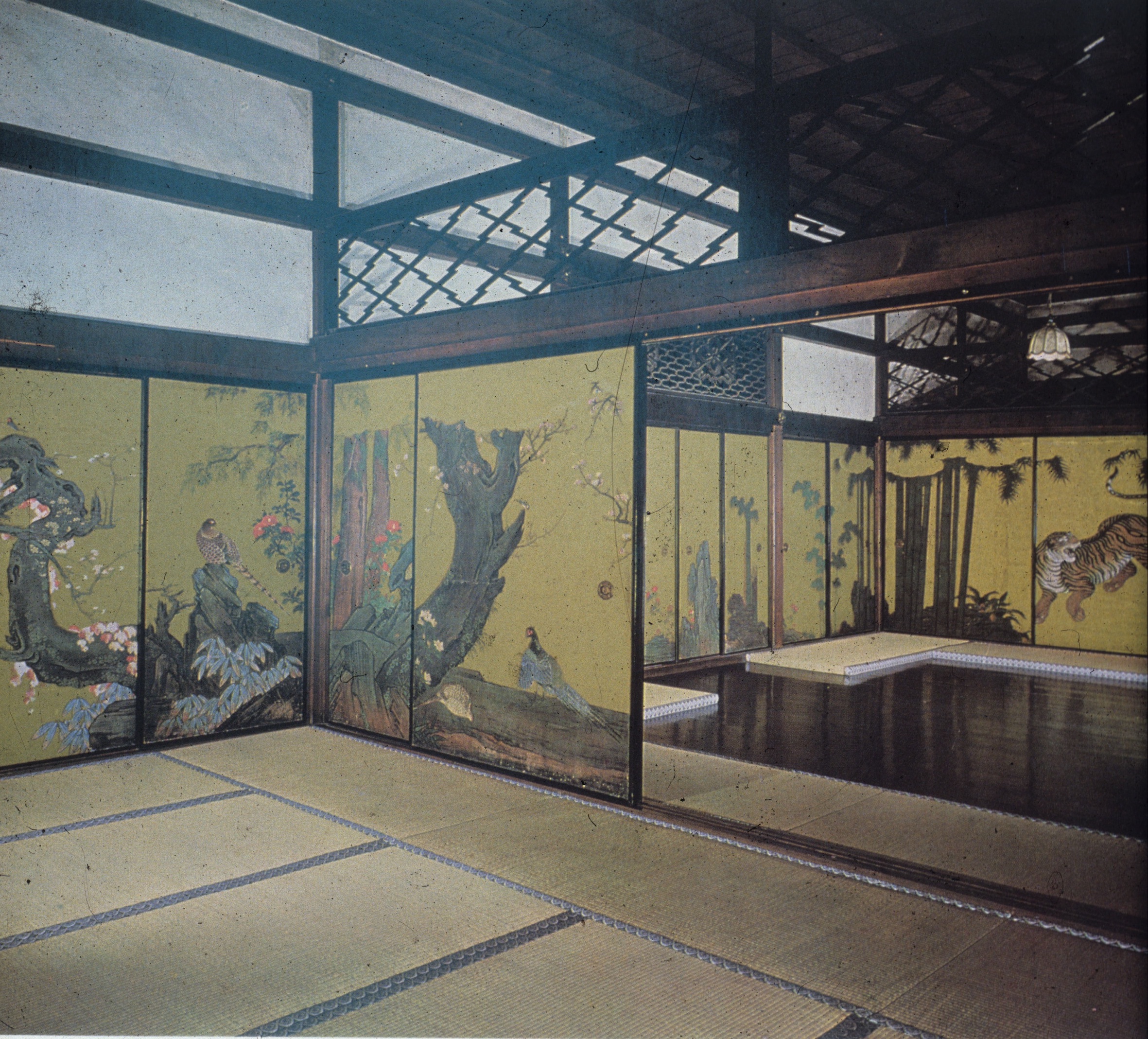
Before the word, “Bijutsu”, paintings, sculptures and crafts existed close to Japanese people’s daily lives.
For instance, there might have been a rich person’s house, that had a place called “Tokonoma,” where art pieces were displayed and viewed.
Painted Fusuma and painted Shoji functioned as partitioning walls defining rooms and spaces within a building.
However, westernizing house styles removed Tokonoma, and got rid of paintings from doors. Paintings that were once intimately entwined with daily lives became special entities, cut-off from our lives, and were only being appreciated through the cognitive bias of the hierarchy system on unusual occasions at an exhibition venue.
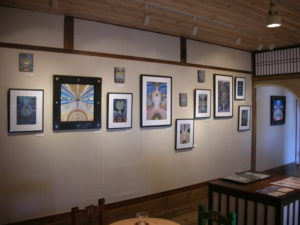

7 Exhibition scenery in Niigata Eya _ Antje E. Gummels’s exhibition 
Despite Japanese people starting to live in the western style rooms having many walls, Japanese didn’t hang any paintings on those walls.
Niigata Eya Gallery was born in Niigata city, which is one of the cities in this situation.
We turned Niigata Eya’s space that had been renovated in the western style back to the original interior.
This way of creating the space had meaning.
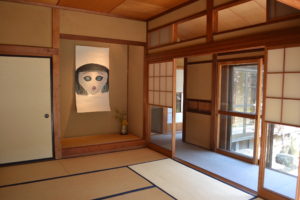

8 “Chieko”by Sinzow hung on Tokonoma in Sakyukan,another exhibition space curated by Niigata Eya
During the last 20 years the trending idea was that artists, including those who recognized themselves as contemporary artists, must move to Tokyo has changed; instead, they held exhibitions in other regions of Japan to increasing extents.
We believe art expression is an action that is created in the inner-depth of an individual’s mind, that is deeper than one’s need for approval; and its meaning is appreciated most clearly only when people view them with their own eyes as an individual.
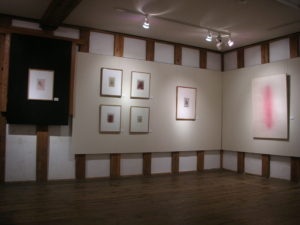

9 Hiroshi Kurita’s exhibition in Sakyukan
Through 22 years of activities, Niigata Eya has met many of those artists.
No need to say, there were lots of Niigata-based artists among them. Last autumn, due to the entry ban, we couldn’t bring those artists’ works here; but thanks to Masoud, Studio44’s amazing support, although these were copies, we were able to exhibit the Niigata-based artists’; Hiroshi Kurita, Sinzow and Momo Hasuike’s paintings at Niigata Eya’s booth in the SUPERMARKET ART FAIR 2021.
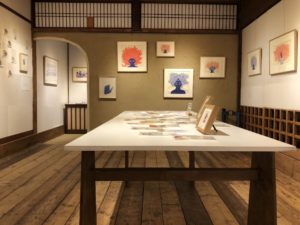

10 Momo Hasuike’s exhibition in Niigata Eya
The goal of Niigata Eya Gallery was to transform an exhibition space which had been previously monopolized by the artists group in the hierarchy system into the place where artist meets viewer individually. This was an adventure to meet the “creator” through thoroughly ensuring the individuality of “appreciation.” In Japan’s history, a gallery was born and grew up as a part of hierarchy. Niigata Eya was a movement to redefine the meaning of a gallery, focusing on the individual’s point of view.
We also publish a gallery map monthly to deliver information about exhibitions held in various galleries in Niigata city. In Japan, actually our information tool is still very much paper-oriented, not digital.
Apart from selling paintings to the local homeowners, to recreate intimate relationships between contemporary art expression and daily lives, we run a program named “eto,” which means “with paintings” in Japanese. We bring paintings to offices and hospitals for display and replace them regularly.Unfortunately, we haven’t established a concrete system that produced proper profit for the artists and us, but this activity is one of the ways to realize Niigata Eya’s purpose.

We gratitude to IASPIS and Scandinavian Japan Sasakawa Foundation for giving us the opportunity to meet many good people in Stockholm.

English translation was polished by Ron Takata


SUPERMARKET 2024
▶ SUPERMARKET 2022 Report(日本語版)(English edition)
▶ SUPERMARKET 2021(Japanese)
▶ SUPERMARKET 2020(Japanese)